Scientific Nutrition:
The Good Fuel
In human beings, the difference between an elite athlete and ordinary persons are the pumping strength of the heart, the ability of the respiratory system to take in adequate oxygen and blow off carbon dioxide, and the amount of fuel that can be stored in the liver. (Guide to Energy Boosting Supplement; Donald Hunningshake, M.D.) This could be the case in gamefowl too. And these things can be developed, improved and maintained through proper training and right nutrition.
To understand how scientific nutrition could help it is necessary to learn how metabolism converts energy in food to energy in the body. The different nutrients: protein, fats, carbohydrates, vitamins and minerals play major parts in the process.
When we eat, food is broken down into its simplest components. Protein is broken down into amino acids. Fat into fatty acids, Carbohydrates into glucose. These substances pass through the intestine to the larger blood vessels, to the thin cappiliaries. Then they move through each of the cells in the body. Amino acids build and repair cells. Fatty acids can be used as fuel later, through the process called beta-oxidation. Glucose becomes the ready source of energy.
There are three steps in the process of converting food to energy. Glycolysis, the Krebs cycle, and the electron transport chain. No need to be very technical here. The bottom line is that efficiency of the entire process depends not only on the machine, which is the body, but also on the quality of the fuel, the food. This is where good nutrition comes in.
Initial Burst: The ATP-CP energy
There are two kinds of energy conversion. The anaerobic or without the use of oxygen and the aerobic or with the help of oxygen. Again, we will avoid becoming too technical and limit our discussion of the matter to a practical viewpoint from where we could relate it to gamefowl conditioning.
In the first burst of activity, the muscles rely on the ATP-CP (Adenosine Triphosphate – Creatine Phosphate) energy pathway which is anaerobic. After a few seconds, the muscles draw energy from glycolysis, which is common to anaerobic and aerobic pathways. The end product of glycolysis, pyruvate, represents a fork in the catabolic (breaking down) process. Pyruvate could be committed to the anaerobic pathway or to the mitochondria leading to the Krebs cycle and the electron transport chain, both of which are aerobic in nature.
When the contest drags on, the body will have to rely for energy on these two aerobic pathways. Cockfighting, however, is more of a sprint than a marathon. Focus should be on anaerobic energy pathway.
Quick Energy: Creatine Ribose
When the muscle contracts, the initial fuel it utilizes is adenosine triphosphate, or ATP.
“ATP releases one of its phosphate molecules to provide energy for muscle contraction and other functions. Once ATP releases a phosphate molecule, it becomes a different compound called ADP (Adenosine Diphosphate). Unfortunately, there is only enough ATP to provide energy for about 10 seconds, so for this energy system to continue ATP must be produced.
Creatine Phosphate (CP) comes to the rescue by giving up its phosphate molecule to ADP, recreating ATP. This ATP can then be burned again as fuel for more muscle contraction. The bottom line is that your ability to regenerate ATP largely depends on your supply of creatine. The more creatine you have in your muscles, the more ATP you can remake.” (Dave Tuttle; User’s Guide to Sports Nutrients)
Otherwise the body will be forced to rely on another energy pathway, glycolysis. The pathway has a by-product that irritates the muscles, causes pain, and interferes with biochemical reactions necessary for muscles to do the job, thus fatigue sets in. So, the earlier the body relies on glycolysis for energy, the earlier it gets tired.
The other pathways –the Krebs cycle and the electron transport chain – are aerobic or employ oxygen. Aerobic convention takes over when the activity is prolonged but less intense or less than maximal effort. This seldom happens in cockfights.
Most important in cockfights is the initial bursts of energy. We have learned that the body can achieve maximum amount of energy if the muscles have enough supply of ATP. And, creatine is what enables the resynthesis of ATP to take place. But during heavy exertion of effort as what transpires in the first few buckles of a cockfight, creatine cannot resynthesize ATP fast enough. Fortunately, ribose can help speed up the process.
Sunday, May 3, 2009
Conditioning, now the thing in cockfighting

Not long ago, an elite few ruled cockfighting in the Philippines, by sheer advantage in chicken quality and raising techniques. This is no longer the case. Gamefowl are now created about equal — at least in top-level competition. The effort to achieve supremacy should now shift from breeding to conditioning.
Now, there are thousands of game fowl breeders in the Philippines. The best bloodlines are here. Thanks to the federal law that bans cockfighting in the US caused by animal rights movements. Many of these Filipinos could whip the toughest American breeders.
As far as breeding is concerned, the gap between top and bottom has narrowed down considerably. Gone were the days when only a few lorded it over, only because they enjoyed overwhelming advantage in chicken quality. Although there still might be some grain of truth to this in small time derbies and cockfights in the provinces, in top competitions, the fact is even the least known could beat the best known. During the 2007 Bakbakan national 10-stag championship this point was underscored once more when three backyard but diligent breeders, who had to combine their stags to put up a single entry emerged as solo champion with perfect 10-win slate besting the then record number of more than 1,400 entries.
With the best bloodlines, enormous resources, and much improved breeding techniques, many breeders are now approaching the summit of breeding ability. Not much could be done anymore when it comes to enjoying overwhelming advantage in chicken quality. Gamefowl entered at the top level contests are now about equal.
Unlike in breeding, supremacy in conditioning is still up for grabs. The field is still very wide open for exploration. The possibilities limitless, considering the new dimensions and technologies available to athletes nowadays. Like some human and horses, gamefowl are athletes. Their performance can be stretched to the limit by sports nutrition, training and supplementation. Yes, there are Muhammad Ali’s and Manny Pacquiao’s. But even a super athlete needs an Angelo Dundee or a Freddie Roach before potential is maximized. Conditioning will replace breeding as the pivotal factor in the sport of sabong. It will be the foremost factor that will spell the difference between winning and losing, at least at top level competition, where, as we observe, cocks are now created about equal.
This handbook is focused on conditioning. This contains modern point of views into the science of condtioning the gamefowl, some of which are new applications to cockfighting that we studied and experimented. Some, such as the concept of power pointing and conditioning pyramid are designed originally by RB Sugbo Gamefowl Technology to make available to the common sabungero knowledge in gamefowl technology which in the past only the big timers enjoyed.


Chickens are for fighting, since time immemorial

The rooster has long been respected
for its ferocity as a fighter
By Richard Blunt
The domestic chicken, or Gallus domesticus as the Romans called it, has lived with humans for centuries. It is probably the descendent of a wild asian bird, and historians have found references to its domestic descendant in the art and literature of India, China, and southeast Asia as early as 3000 BC. Egyptians were managing large flocks of chickens by the Second Dynasty (2890 to 2680 BC), but for some reason did not record much about their accomplishments in the breeding and keeping of chickens. Greek writings, however, describe how Egyptians designed and built clay incubators with the capacity to incubate and brood 10,000 to 15,000 chicks at a time. Incubators with greater capacity have only existed in this country and western Europe for about 80 years.
It was sometime before the sixth century BC that the Egyptians and the Persians introduced the wonders of domesticated chickens to the Greeks. The Persians shared their talent for breeding Malayan and Indian jungle fowl, which were used primarily for cock fighting, while the Egyptians taught the Greeks how to successfully develop and maintain breeds for the production of eggs and meat. For the next 200 years, chickens became an indispensable element in Greek life. At first they were used primarily in religious ceremonies, folk medicine, and the popular sport of cock fighting. But by the third century BC, breeding chickens for egg laying and meat production had become a priority in Greek civilization.
The Greeks passed their knowledge of the chicken on to the Romans. It was in Rome that the chicken truly reached its apotheosis. There, it became a sacred bird, often used as the central figure of various methods of divination, apothecary, and as a serious subject for philosophical inquiry. In Rome, fighting cocks were trained like gladiators. They were fed garlic before they fought in the belief that it would increase their courage and ferocity. The Romans also believed that garlic had the same effect on men. The writings of Roman naturalists and philosophers elevated the chicken to an exalted position in urban civilization. They skillfully molded it into a genuine object of scientific scrutiny and philosophical inquiry. No longer would the chicken be a taken-for-granted resident of the barnyard or cockpit.
The chicken has always meant much more to people than a cheap meal. The cock, or rooster as we now call it, has long been respected, especially for its ferocity as a fighter. In ancient Syria, Borneo, and Sumatra the fighting cock was worshiped as a god—an exalted status that usually saved it from becoming Sunday dinner. There was even a time in ancient Greece when cock fighting was considered a national sport. The Romans viewed the cock as a noble gladiator, and the cock fight was a solemn ceremony that reinforced their belief that men should be brave—imitators of the cock.
Cockfighting came to its greatest secular popularity and refinement in late medieval England. The Church made vigorous efforts to repress it but only succeeded in driving it underground. As a compromise with the people, the Church did finally sanction organized cockfighting events on special days, such as Shrove Tuesday. One very popular Shrove Tuesday event was held in English grammar schools. The schoolmasters were paid a “cock fee” for allowing the children to bring their cocks to school, and all learning was suspended for the day as the desks and chairs were pushed aside to make room for the daylong contests. The student who owned the champion cock was excused from corporal punishment during Lent, along with one other student of his choice. At the end of the day the school master was presented with all of the cocks that were killed.
During the reign of Henry VIII, cock fighting flourished in England, exceeding even horse racing in popularity. James I, Charles II, And William the III were among other monarchs who were avid cockers. By the end of the 18th century, however, reformist doctrine started to take hold with the English majority. By 1835, cock fighting was reduced to the rank of a cruel and capricious sport and was, once again, driven underground.
In spite of being prohibited in England, after 1835 cockfighting found a new home in America. Ships that carried English settlers to America also carried chickens and fighting cocks. Cock fighting was frowned upon by the Puritans but it still flourished from New York to Georgia. Before and after the Revolution, New York was the center of cockfighting in the East. Here the sport was dominated by freed slaves and Irish immigrants.
Before long, the sport spread west and became most popular in areas settled by Southerners and the Irish. As in England, reformers moved quickly to force legislation to outlaw cock fighting but it soon became obvious that there was little sentiment for this type legislation on the national level, so the individual states were left to pass there own laws. But even on the state level, very little anticocking legislation was passed until early in the 20th century. While visiting friends in Florida, in 1971, I was surprised to find that cockfighting was still legal in that state.
Outlawing cockfighting in this country has had the same effect as Prohibition. As you read these words somewhere in this country, loyal members of a tight fraternity of cockers is gathering around a pit, anxiously waiting to place their bets on the outcome of the main event.
Cultural influence
The chicken has influenced our languages and cultures. From ancient times to the present, if two people look or act the same, they are said to be “hatched from the same egg.” The ancient Greeks compared poor writing to “chicken scratches.” The proverb, “I would not have him count his chickens so soon before they hatched,” was found in a collection of proverbs published in 1579.Superstitions surrounding chickens are also alive and well in both urban and rural areas. One superstition declares that there will be sickness in the house if a hen crows. Another claims that a farmer's chickens will be like the first person who comes to his house on New Year's morning—a stout and prosperous person meant plump chickens while a poor meager person meant scrawny chickens.
Make a wish
Two people tugging on the magic clavicle, or wish bone, until it breaks, dates back almost 2,500 years to the ancient Etruscans. Chickens were kept in Etruscan temples to answer questions by pecking at corn kernels in a circle marked with letters of the alphabet. When the bird was through eating, a priest would enter the circle and interpret the results. When one of these sacred birds died, its collar bone was dried and believers were allowed to stroke it and make a wish. When the custom was passed to the Romans, people started tugging on the bone until it broke. The wish of the person holding the half containing the “head” would be granted. I've heard it suggested that the phrase, “to get a lucky break,” came from this ancient custom.
Before trained physicians came on the world scene in 18th century, chickens provided a living drug store of remedies for everyone—rich and poor. In the practice of folk medicine, people were inclined to reach for a chicken to cure almost any malady of the body or the spirit. In ancient Greece, as well as other parts of the world, fever, arthritis, colic, dysentery, epilepsy, headache, constipation, and cough were all treated with various parts of the chicken. The remedies are endless and most are far too complicated and absurd to mention here. But some made sense and are still used today: a bowl of homemade chicken soup has always been, and probably always will be, prescribed as a comfort and cure for many maladies, real and imagined.
Llamado Tayo; April, 2009
LLAMADO TAYO
Rey Bajenting
Wag na lang mag-carboloading
Salamat po sa inyo. Napuno ang ating cellphone ng mga pagbati sa pagbabalik ng pitak natin. Pagbabalik na mas maganda pa, dahil kung noong una sa isang pahayagan of “general circulation” tayo nagsusulat, ngayon dito na sa Larga, isang pahayagan na hinggil sa sabong talaga.
Di na po natin nasagot ang iba kaya dito na lang natin pasasalamatan ang lahat. Masaya po tayo dahil masaya kayo sa pagbalik ng Llamado Tayo. Maraming salamat.
Ang isang ito ay katangitangi. Sabi nya: “ … The comeback of Llamado tayo is a much welcomed development, like a breath of fresh air.”
Naku! Ginawa pa tayong toothpaste.
Okey ah. Pero di tayo naniwala. Bola lang yon, dahil galing yon kay kamanang Anthony “Tonet” Espinosa. Kaibigan po nating matalik na siyang nangangasiwa sa pasabong ng Masang Nagmamanok (MANA) sa Pasay City Cockpit.
Bawat 3rd Wednesday of the month ang pasabong ng MANA sa Pasay. Ngayong April 15 ay ang pang-apat na pasabong ng MANA sa naturang sabungan. Subukan po nating maglaban at baka makuha natin ang Ring of Excellence o Singsing ng Kagalingan. Gold ring po ito at special prize na mapapanalunan ng Fighter of the Month.
Sampung libong piso lang ang halaga ng singsing na ito ngunit maipagmamalaki nating maisuot bilang sagisag ng kagalingan sa pagmamanok. Ang singsing ay karagdagang premyo, hindi kasama sa guaranteed prize na P100,000.
Ang pasabong ng MANA ay one-cock fastest kill ulutan. P1,100 ang entry fee at P2,200 lang ang minimum bet. Ang gold Ring of Excellence ay mapupunta sa pinakamabilis na tatlong straight na panalo na di aabot 2 minutes ang total time.
Sa bawat pasabong ng MANA ay may mga karagdagang premyo at mga give-aways dahil may mga sponsors ang MANA na naniwala sa adhikain at layunin ng grupo para sa ikabubuti ng sabong at ng masang sabungero. Kaya palaging masaya ang mga pasabong ng MANA, at maraming sultada.
Sa April 15 mamimigay tayo ng libreng subskripsyon ng Larga sa lahat ng maglalaban para palagi tayong magkatalakayan dito sa Llamado Tayo.
Sa Pasay po yan. Sa Cavite naman ay may pasabong ang MANA sa Cavite Coliseum, sa June 20. One cock ulutan-timbangan. Umaga hanggang 2pm ulutan tayo. Pagdating ng 2pm timbangan na. May karambola pa bilang intermission.
Ang titulo po ng pasabong na ito sa Cavite ay “MANA Larga Na!”
Pero bago po yan ay may seminar tayo sa Bacoor, Cavite sa May 18. Handog ng Excellence Poultry and Livestock Specialist. Magpunta po tayo doon. Ang batikang breeder at tanyag na masang nagmamanok ang ating bisita. Si Lance de la Torre po. Si Lance ay isang dating masang nagmamanok---handler, mananari at taga-alaga ng manok panabong. Naging breeder siya at nagkampyon sa World Slasher. Ngayon isa siya sa pinakatanyag na breeder sa Pilipinas.
Patuloy po ang pagdami ng mga aktibidad ng MANA. Patunay sa pagtanggap ng ng sambayanang sabungero sa layunin at adhikain nito na ipaglaban ang sabong at itaguyod ang kapakanan ng masang sabungero.
Kamana salamat at matutunghayan na naman namin ang Llamado tayo. Makapagtanong na naman kami at patuloy kaming matoto. Hanggang ngayon kamana hindi ko pa alam kung paano talaga ang pagpili ng mahusay na manok. Pwede mo masagot kamana? (MANA 08498)
Isa po sa panay tinatanong sa atin ay kung paano ang pagpili ng magaling na manok. Hindi po madaling masagot kamana. Napakahaba kung ipaliwanag natin ng buo. Ang totoo, kailangan ng matagaltagal na karanasan bago tayo maging bihasa sa pagpili.
Ang susi sa matagumpay na pagsasabong ay ang wastong pagpili. Kaya sa Manwal ng Mana sa Makabagong Pamamaraan ng Pagpili at Pagkundisyon, na tayo ang may akda, ay binigyan natin ng kahalagahan ang aspeto ng pagpili at tinalkay natin ito ng husto. Ang magaling na nagmamanok ay magaling sa pagpili. Ano mang pamamaraan sa pagkundisyon, pagsanay at pagpakain ay walang silbe upang mapagaling ang manok na kulang sa likas na kagalingan.
Iba-iba ang pamantayan sa pagpili. At ang pamamaraan at batayan sa pagpili ay nag iiba rin kasabay sa paglipas ng panahon at pagpalit ng konsepto at pag-iba ng dimensiyon ng sabong na bunsod ng paglabasan ng mga bagong lahi ng manok at sistema sa pagmamanok.
Konkretong katangian. Ang payo natin ay ang unahin ang mga konkretong katangian.
Ang mga manok lang na pumasa sa mga kanaisnais na konkretong katangian ang dapat ibitaw upang tingnan kung makapasa ba ang mga ito sa kagalingan sa pakikipaglaban. Ang mga konkretong katangian ay ang bloodline o linyada; pagpapalaki; at ganda ng pisikal na anyo.
Unahin ang mga konkretong katangian dahil hindi na ma-iiba ang mga ito hanggang sa araw ng laban, samantalang ang kagalingan sa pakikipaglaban ay paibaiba, depende sa galing ng kalaban o sa kundisyon ng ating manok.
Huwag na huwag pipili ng manok na may kakulangan sa mga konkretong katangian dahil lang nakita natin itong nagpamalas ng kagalingan sa pakikipaglaban sa isa o dalawang pagbitaw. May mga manok na nanghihiram ng gilas.
Ang kagalingan sa bitaw ay mahalaga. Ngunit ito ay hindi konkretong aspeto dahil maaring mag iba ang istilo at kagalingan sa pakikipaglaban depende sa istilo at kagalingan ng kalaban o sa kundisyon ng ating manok.
Magkaganoon paman, dapat mahigpit din ang ating pamantayan sa kagalingan sa bitaw. Sa ating pagpili batay sa kagalingan sa pakikipaglaban Ito ang ating pamantayan. 1) Cutting ability; 2) Tapang, tibay at lakas; 3) Utak, liksi at bilis.
Sir Rey pwede po ba ring magtanong kahit hindi pa membro ng MANA? I-text ko lang po kasi hindi po ako nagkaroon ng pagkakataon na lumapit sayo sa pasabong ng MANA sa Pasay noong Marso. Ano po ba ang pinakamaigeng pakain para carboloading dahil magkaiba po ang mga itinuturo nakakalito. At paano ang pagpamembro ng MANA.
Pwedeng pwede pong magtanong kahit hindi membro ng MANA. Lahat naman tayo, basta nagmamanok, ay kamana. Kung nais nyong magpamembro i-text lang pangalan, lugar at hanapbuhay sa numero ko. Bigyan natin po agad kayo ng MANA number. Wala namang bayad ang pagpamembro ng MANA.
Huwag kang malito kamana. Lahat nang mga pakain na sinasabi mong tinuturo ay may mataas ang bahagdan ng carbohydrate kaya ginagamit sa tinatawag na carbo-loading. Mais, kanin, trigo, prutas, at ang iba pa ay parehong maaring gamitin. Depende lang sa sitwasyon.
Ngunit may sasabihin ako sayo kamana. Ito’y isang bagay na mapait siguro lunukin ng maraming nagmamanok at ng mga nagtuturo ng pointing sa mga cocking schools, academy, magazine at telebisyon.
Ang katotohanan ang carboloading o glycogen loading ay hindi kinakailangan sa uri ng sabong natin dito sa Pilipinas. Ang tinutukoy natin ay ang nakasanayang pamamaraan ng pag-carboloading na tinuturo ng iba. Ang pamamaraan na magbibigay ng mas mataas na bahagdan ng carbohydrate simula tatlo o dalawang araw pa bago ang laban. Ang nangangailangan ng carboloading ay ang mga atleta na sa endurance na kumpetisyon tulad ng triathon, marathon at long distance cycling. Sa sabong natin , saglit lang tapos ang laban.
Ang kailangan ng manok ay hindi ang maraming glycogen sa atay na siyang mangyayari kung magcarboloading tayo, kundi ang glucose sa dugo na agad agad magagamit. Dapat, mga pakain na mataas ang glycemic index (GI). Ibig sabihin,mga pakain na madaling magpataas ng sugar level sa dugo, kahit na madali rin ang pagbaba nito, dahil, yon na nga, madali lang matapos ang labanan ng manok
Ang RB Sugbo ay dati ring nagka-carboload. Ginawa din natin ito, at hindi naman kasamaan ang naging resulta. Ngunit sa ating pagpapatuloy na pagsisiyasat at pag esperimento ay natukoy natin ano ang talagang dapat. Hindi naman nakakasama ang carboloading, ang sinasabi lang natin ay hindi na kailangan. Ang kailangan ay ang pagtiyak lang na may sapat na glucose sa dugo at creatine at ribose sa kalamnan sa araw ng laban.
Sa Manwal ng Mana sa Makabagong Pamamaraan ng Pagpili at Pagkundisyon tinalakay po natin at ipinaliwanag ito ng husto sa yugto hinggil sa pagpatuktok. Ang pagpatuktok ay ang salitang inampon natin para isalin sa Pilipino ang salitang Inglis na pointing.
Congrats nga pala sa MANA Cebu group. Nagkampyon po ang grupo sa P3Million, 6-cock CVBA Directors Cup noong March 23-28 sa Talisay Sports Complex. Sa kalahatang 160 entries tatlo ang nagkampyon sa score na 6 wins. Ang MANA group ay binuo ng RB Sugbo-SIS, Khazimline at Garces Farms. Lahat po mga kamana.
(Para sa inyong mga katanungan tungkol sa pagmamanok o kaya’y sa MANA si Rey Bajenting ay pwedeng i-text sa mga numerong ito: 0927-995-4876 o 0908-980-8154)
LLAMADO TAYO
Rey Bajenting
Praktikal na Pagpapalahi
Happy Easter Sunday sa lahat!
Ipagpaumanihin nyo po kung sa nakaraang mga araw marami tayong mga text messages na hindi nasagot. Semana Santa po kasi.
Marami sa natanggap nating mensahe ay katanungan at reaksyon sa ating isinulat dito sa nakaraang linggo. Hinggil po sa nasabi nating di na kailangan ang carbo-loading. Ang iba ay hindi naniniwala na di na kailangan ang carbo-loading. Ngunit ang nakararami sa nagtext satin ay gustong malaman ng buo kung bakit, at hiling nila na idetalye natin ng husto.
Sa Manwal ng MANA sa Makabagong Pamamaraan ng Pagpili at Pagkundisyon nakadetalye po ito. Sa mga di pa nakabasa sa naturang Manwal. Para sa inyo sisikapin nating ipaliwanag dito.
Ang una kasing ginagamit ng katawan at mga kalamnan para gawing enerhiya ay ang glucose na nasa dugo. Ang glucose na hindi nagagamit ay nagiging glycogen at ito’y nakaimbak sa atay at iba pang parte ng katawan. Ang carbohydrates naman ay nagiging glycogen din.
Kung nag-carboloading tayo dadamihan natin ang bahagdan ng carbohydrate sa pakain ang mangyayari ito’y magiging glycogen na naiimbak. Kaya ang isa pang tawag ng carboloading ay glycogen-loading.
Sa unang saglit ng labanan ang ginagamit ng kalamnan bilang enerhiya ay ang glucose. Kung maubos ito, mapipilitan ang katawan na gamitin ang glycogen, ngunit dadaan pa ito ng proseso kaya maaring hindi agad-agad. Pansamantala, pagod ang kalamnan o ang katawan dahil kulang pa sa panggatong na gagawing enerhiya.
Upang maiwasan ito kailangan ang maraming glucose. Matatagalan bago gagamit ang kalamnan ng glycogen. At dahil madaling matapos ang sabong natin dito sa Pilipinas, kung may sapat na glucose, malimit tapos na ang laban o lubha nang sugatan ang kalaban bago maubos ang glucose.
Ang konsepto kasi ng carboloading ay hango sa pamamaraan ng mga Amerikano. Sa kanila matagal bago matapos ang laban dahil gaff, yong parang ice pick, o di kaya’y short knife ang malimit na sandatang kinakabit sa kanilang manok. Alam natin na mga Amerikano ang unang nagturo satin ng pamamaraan sa pagmamanok. Kaya nga ang tawag natin sa paghanda o pagkundisyon ay “keep” at ang huling yugto ng keep ay “pointing.” Americanized kasi.
Ngunit hindi lahat ng pamamaraan ng Amerikano ay angkop para sa uri ng sabong mayroon tayo dito. Una, magkaiba ang sandata. Pangalawa magkaiba ang klima. Kaya dapat lang na manaliksik tayo ng mga makabagong pamamaraan na mas angkop. Hindi sapat na gayagaya lang tayo sa kanila.
Maliban sa Manwal ng MANA sa Makabagong Pamamaraan ng Pagpili at Pagkundisyon may pamphlet rin ang RB Sugbo Gamefowl Technology hinggil sa Pagpatuktok. Ito ay ang “Power Pointing.” Ang pagpatuktok ay ang salitang inampon ng RB Sugbo upang isalin sa Pilipino ang salitang Inglish na pointing. Ang ibig po kasing sabihin ng pointing sa salitang sabungero ay ang pagdala ng manok sa tuktok ng kanyang kakayahan sa pakipaglaban sa araw at oras ng laban.
Ang Power Pointing ay mababasa nyo po libre sa Tilaok.blogspot.com. Ito ang blogspot ng Masang Nagmamanok (MANA). Libre din po itong ipamimigay sa mga seminar ng MANA. Samantalang ang Manwal ng Mana ay nagkahalaga ng P300 ngunit ngayon libre na ito para sa mga membro ng MANA o mga kamana na makaatend ng seminar o maglalaban sa buwanang pasabong ng MANA sa Pasay City Cockpit.
Talking of pasabong, ang 4th Monthly pasabong ng MANA sa Pasay ay ngayong Miyerkules na. April 15 po. Sino na naman kaya ang makatatanggap ng “Gold Ring of Excellence” Mapapanalunan po ito ng MANA Fighter of the Month.
Sa Pasay ay bawat pangatlong Miyerkules ng buwan ang fastest kill ulutan ng MANA. Sa Hunyo may pasabong rin tayo sa Cavite Coliseum at sa Hulyo magkakaroon din sa Las Pinas Coliseum.
Praktikal na pagpapalahi
May dalawang manwal para sa Masang Nagmamanok (MANA) na inihanda at pinalabas ng RB Sugbo Gamefowl Technology. Ang una ay ang Manwal ng Mana sa Makabagong Pamamaraan ng Pagpili at Pagkundisyon. Inuna natin ang manwal sa pagpili at pagkundisyon dahil, palagay natin mas nararapat na unang matutunan ang pagpili at paglalaban ng manok panabong kaysa pagpapalahi ng mga ito.
Walang sinuman ang magiging magaling na manlalahi kung siya’y hindi marunong pumili ng magaling na manok. Kung di natin alam kung ano ang manok na magaling paano natin malalaman kung anong uri ng manok ang ipalabas sa ating pagpapalahi?
Pamamagitan lang ng paglalaban o panunuod ng laban natin matutunan kung ano ang magaling na manok. Sa loob ng mahabahabang panahon ng paglalaban, magiging bihasa tayo sa pagpili. Kapag tayo’y bihasa na sa pagpili saka lang natin pasukin ang larangan ng pagpapalahi.
Ang pangalawa ay ang Manwal ng MANA sa Praktikal na Pagpapalahi. Tulad ng naunang manwal, ang pangalawang ito ay payak at walang palamuti. Una kasi nating konsiderasyon ay ang isiksik ang lahat na impormasyon sa pinakatipid na paraan. Walang magagarang litrato, walang makulay na pahina. Wala ring mabuklaklak na mga salita na makapagpahaba sa talakayan at aagaw ng malaking ispasyo. Ang mga ito ang makapagpataas ng ating printing cost.
Tulad ng nasabi natin sa naunang Mawal, ang atin ay inihaw lang. Walang rekados, ngunit nandyan pa rin ang laman at ang sarap. Puno pa rin at siksik sa kaalaman na magagamit natin sa ating pagnanais na makapagpalabas ng manok na matatawag na sarili nating likha.
Ang layunin lang naman natin ay mabusog ang ating mga kamana. Oo, ang layunin ng RB Sugbo, simula sapol, ay ang makapamahagi ng kaalaman sa paraan na abot kaya namin, at makakaya rin ninyo. Layunin natin na mabigyan ang masang sabungero, sa paraan na maging abot kamay ang kaalaman na dati-rati’y ang mga big timer at mga mayayaman lang ang may taglay.
Ang manwal na ito ay naglalaman ng sistema at pamamaraan sa praktikal na pagpapalahi na angkop para sa atin mga maliliit o backyard breeders. Karamihan sa mga aklat sa pagpapalahi ay mga “idealistic.” O ang tinatalakay lamang ay ang mga ideal o tularan na sitwasyon. Kung ganun, walang puwang ang maliliit sa larangan ng pagpapalahi. Karamihan sa mga aklat sa pagpapalahi ay nagsisimula sa pagtalakay sa laki ng perang kakailanganin; sa lawak ng lupain; at sa mahabang panahon na gugulgulin. Kaya, kung pakingan, napakahirap para sa atin ang pagpapalahi.
Totoo. Yan ang dapat. Yan ang tularan na sitwasyon. Subalit kung di natin matupad ang tularan na kalagayan, hindi na ba lang tayo magpapalahi? Wala na ba lang tayong karapatan na masiyahan at malibang sa aspetong ito sa pagmamanok? Kung ganun ang mga mayayaman lang ang makapagpalahi. Si Don Jose lang ba ang maaaring magpalahi, si Mang Pepe, hindi?
Maari naman tayong magpalahi kahit hindi sa isang ideal na sitwasyon o tularan na kalagayan. Dahil ang ating pagsasabong ay maari naman nating ibatay sa kalibre ng ating kakayahan o sarili natin kaurian. Pwede naman tayo mag-takda ng pamantayan sa pagpapalahi na abot kaya at aboy-kamay natin at angkop sa lebel ng pagmamanok kung saan tayo naglalaban. Ang manok ni Don Jose, ang makakalaban ay manok ni Don Ricardo. Bagkus, ang manok ni Mang Pepe ang makakalaban ay kay Mang Carding. Ito ang ganda ng sabong.
Yan ang unang nating gawin kung tayo’y magpapapalhi. Ang mag-takda ng realistikong pamantayan at hangarin. Para sa atin na pangkaraniwang sabungero, hindi makakatotohanan na mag hangad tayo na manalo sa mga international derbies kung saan libo-libo kundi man milyon-milyong piso ang kailangan kung nais nating sumali.Wala tayong kakayahan na maglaan ng sapat na salapi para dyan.
Kung tayo ay magpapalahi sapat na sigurong hangarin ang makapaglikha ng mga manok na magpapanalo sa partikular na daigdig ng sabong na ating ginagalawan. Kung ang hangad natin ay yun lang makabuo ng isang linya ng mga panabong na maaring isabak sa mga hakpayt at maliliit na derbi, hindi siguro gaano kahirap. O kaya’y makabuo ng mga linyada na mawiwilihan ng mga mamimili at makadulot sa atin ng karagdagan mapagkakitaan.
Subalit hindi ibig sabihin na ang ating layunin at hangarin sa pagpapalahi ay mananatiling ganyan habang panahon. Kung may pagkakataon bakit hindi tayo maghangad ng mas mataas? May mga nagpapalahi na nagumpisa sa halos wala ngunit lumaki ng lumaki. Ang ibig lang natin sabihin dito, na dapat ang hangarin natin ay batay sa ating pangkasalukuyang kakayahan. Ang hangarin ay magiiba, alisunod sa pagiba rin ng ating kakayahan.
Gayunman, hindi hangad ng manwal na ito na magturo kung paano ang pagiging isang tanyag na manlalahi, dahil walang sino man ang makakapagturo ng ganoon nino man. Ang layunin natin dito ay ang pagbigay ng patnubay sa larangan ng praktikal na pagpapalahi na sapat upang ang isang masang sabungero na magnanais magpalahi ay makapagsimula sa wastong hakbang.
Ang Manwal na ito ay libre rin sa mga paseminar ng MANA. Dahil nga layunin ng MANA ang makapamahagi ng kaalaman sa pagmamanok. Sa mga hindi makadalo sa ating mga seminars, abangan nyo lang dito sa Larga at untiunti nating ipalabas dito ang mga yugto ng ating mga Manwal.
(Para sa inyong mga katanungan tungkol sa pagmamanok o kaya’y sa MANA si Rey Bajenting ay pwedeng i-text sa mga numerong ito: 0927-995-4876 o 0908-980-8154)
LLAMADO TAYO
Rey Bajenting
Tanyag na breeder Lance de la Torre
Speaker sa libreng Mana seminar May 18
Sa nakaraang Miyerkules, April 15, Matagumpay na naman ang buwanang pasabong ng Masang Nagmamanok (MANA) sa Pasay Cockpit. Dahil po sa walang kupas na pagsuporta ng mga kamana at ng marami pang iba na kahit hindi pa kasapi ng MANA. Kung sabagay kahit hindi kasapi ng MANA ay kamana pa rin. Dahil tayong lahat ay pareparehong mga masang nagmamanok. Maraming salamat mga kamana.
Hindi nagpahuli ang ating mga kamana. Sa pinakaunang sultada panalo agad ang manok ni kamanang Long Hair. Mula po nang magsimula ang pasabong ng MANA sa Pasay palaging Nagkataon na ang unang sultada ay kay kamanang Long Hair. at palaging panalo ang manok niya. Palagay ko sinasadya ni Kamanang Long Hair na unang mapalaban ang manok niya dahil bwenas siya kapag ganito. Si kamanang Army Celis naman ang nagwagi sa P10 thousand 1st fastest kill sa pinakaunang bracket, ang sultada 1-10. Talagang palaban ang mga kamana.
Sa unang pagkakataon sa loob ng apat na buwanang pasabong ng MANA sa Pasay, noong nakaraang Miyerkules ay walang nagwagi sa Kill Quick Fighter of the Month. Ang Kill Quick fighter award ay mapapanalunan lang kung ang pinakamabilis na tatlong panalo ay may total time na hindi aabot ng 2 minuto. Ang kay Doc Ayong Lorenzo, mismo ang mayari ng Excellence Poultry & Livestock Specialist, ay may dalawang panalo isang tabla. Ang kay kamanang Ed Genova naman ay dalawang panalo isang talo. Si Kamanang Ed po ang record holder sa ating Kill Quick award. Siya ang nanalo sa Ring of Excellence sa buwan ng Pebrero sa pinakamabilis na time na 48 seconds sa tatlong panalo.
Dahil walang nakakuha sa KQ award noong Miyerkules,sa susunod na pasabong ng MANA sa Pasay, sa May 20, ang KQ Award ay magiging mas malaki. Sa Mayo ang KQ fighter of the month ay makatatanggap ng gold Ring of Excellence worth P10 thousand at isang trio galing sa isang tanyag na breeder na nagkahalaga ng P60 thousand. Bale P70 thousand po lahat.
Ang KQ fighter of the month nga pala para sa Marso ay ang “Ika” entry ni Butchoy Olano ang kilalang bigtime pit manager at gaffer. Ang Ika ay pinangalan sa anak niyang panganay na si Cheska. Ang handler niya na si Totoy Mola ang tumanggap sa singsing na ibinigay noong Miyerkules sa awarding ceremonies sa Pasay cockpit.
Talagang maghanda tayo mga kamana para sa May 20. Sa pagkakataong ito, ang labanan ay 3- cocks fastest kill. Ito’y special edition, bilang pasasalamat ng Mana sa inyong lahat, mas malaking papremyo, abot P200 thousand ang total; mas masaya, mas maraming give-aways. At may members benefit sa mga kamana na tig-isang libong piso bawat entry na ilaban nila o kaya’y makumbida. Ang entry fee ay ganoon pa rin, P1,100 bawat manok, bale P3,300 bawat entry. Abangan natin ang kumpletong anunsyo ni kamanang Tonette Espinosa.
Mga katanungan
Ang mga sumusunod ay iilan sa mga katanungan na natanggap at nasagot natin sa nakaraang linggo. Maramirami po tayong natatanggap pero hindi natin mailathala ang lahat. Bagama’t sisikapin nating masagot lahat ng inyong mga katanungan kahit sa text man lang. Bahagi po yan ng serbisyo ng MANA at RB Sugbo.
Good pm po. Gusto ko lang humingi ng tip para tumibay at gumanda ang kilos ng panlaban ko. Sana matulungan mo ako. Isa lang akong ordinaryong sabungero. (April 14, 2009; 9:56:53pm; Chito Hernandez)
Ang tibay ng manok, unauna, ay nasa linyada. Nasa dugo po ito na nakatakda mula magsanib ang semelya ng ama at itlog ng ina. Tulad ng ibang katangian, ang tapang o tibay ay itinatakda ng pagpapalahi, pinapaunlad ng angkop na kapaligiran at tamang pagpalaki, tapos pinaiigting ng wastong pagkundisyon.
Sa lahat ng yugto ng buhay ng manok, mula sisiw hanggang sa ito’y malapit na ilaban, napakamahalaga na mabigyan ito ng tamang nutrisyon at sapat na ehersisyo. Sa panahon na malapit na ang laban, may mga bagay o substance na makakatulong sa pagpaigting ng tibay.
Halimbawa po sa mga ito ay ang mga blood conditioner o ang tinatawag na oxygenizer. Nasa dugo kasi ang hemoglobin na siyang nagdadala ng oxygen sa lahat ng parte ng katawan pati na ang utak. Kung kulang sa oxygen mahirapan ang mga kalamnan sa paggawa ng enerhiya. Kung kulang sa oxygen sa utak, ang manok ay maaring mag pass out kahit ito’y buhay.
Kaya mahalaga na nasa maayos na kundisyon ang dugo. Makakatulong sa blood conditioning ang b complex vitamins at ang mineral na iron. Taglay ito ng mga gamot na nasa merkado na ngayon. Halimbawa ang Complexor, Bexan, Belamyl at iba pa.
Tapos kailangan din ng vasodilator. Ibig sabihin yong nagpapaluwang sa mga ugat na dinadaluyan ng dugo. Wala kasing silbe kung mag clog ang dugo. Kunti lang ang mag circulate na oxygen Ang kailangan naman dito ay B15. Halimbawa ng produktong may taglay na B15 ay ang Respigen.
Batay sa ating nalalaman, ang pagpatibay ng manok ay isang mahabang proseso. Walang short cut at magic na gamot.
Gud pm again kamanang Rey yong manok ko matagal na sakin pakiramdam ko mapili sa pagkain. Feeding ko regular concentrate at maintenance pellets. Lahat naman ng iba umuubos ng ganung feeding. Baka may pipita? Masigla naman. Kailan muli ang seminar ng MANA? (RR001314).
Kamana di nagkatugma ang initial mo sa iyong mana number. Dito sa record natin, Jay ang pangalang nakalagay. Baka mali ang record natin paki correct nga.
Kung matagal na sayo ang manok na yan kamana, hindi na paninibago ang dahilan kung bakit ito’y walang ganang kumain. Maaring pipita nga. I-check mo.
Ang ibang maaring dahilan ay stress o pagkabalisa; bulate o hanep at kuto; o baka may karamdaman.
Ipahinga mo muna Kamana, baka hapo yan. Purgahin mo at paliguan ng anti-mite shampoo. Pagkatapos i-bacterial flushing o bigyan ng anti-biotic sa loob ng dalawang araw. I-fasting mo. Wag pakainin isang beses bago purgahin. Ang mga pampurga ngayon ay maari nang walang fasting ngunit sa kasong ito, ang nais natin ay gutumin ng husto ang manok upang bumalik ang gana nitong kumain.
Ang susunod na malaking seminar ng MANA ay sa Bacoor, Cavite sa May 18. To be presented by Excellence Poultry & Livestock Specialist. Si Ginoong Lance de la Torre ang speaker. Si Lance ay ang di makakalimutang breeder na nagpanalo para kay Patrick Antonio sa World Slasher noong 1988.
Si Lance ay isang masang nagmamanok—handler, conditioner at mananari—na ngayon ay isa nang napakatanyag na breeder. Ang kanyang farm sa Talisay, Negros Occidental ay isa sa pinakamaganda sa buong mundo. Ang manok niya ay kabilang rin sa mga pinakamahal at kinawiwilihan ng mga big time cockers. Dalawang dekada nang nanatili si lance de la Torre sa tuktok ng kagalingan sa pagpapalahi. Si lance ang tinuturing ng MANA na idolo ng masang sabungero.
Ang nais na dumalo sa seminar na ito, kahit hindi po taga Cavite, ay magtext lang kay kamanang Gani Dominguez, ang chairman ng MANA Cavite chapter, 0928-521-2513. Libre po to. Pati snacks.
Kamanang Rey gud pm po.Ang isang inahin ba pag nagkaanak ng duwag ibig sabihin reject na? Tnx po. (JS001273)
Itong nagtanong ay si kamanang Jomar Santiago ng Nueva Ecija. Matagal nang kamana dahil ang number nya ay 1273 pa lang.
Hindi pa tiyak kamana na reject. Suspect pa lang. Kasi maaring ang duwag na genes ay galing sa ama. Ngunit kung ang mga anak niya na nagpakita ng pagkaduwag ay magkaiba ang mga ama, samakatuwid galing sa inahing ang duwag na dugo. Kung ganoon, i-reject mo.
Gud am sir rey ano po ba ang mga pakain nakapagpataas ng glycemic index para pointing? (Mark ng QC).
Gud am sir. Isa po ako sa readers ng Larga specially your column. Ask ko lang kung di na kailangan ang carboloading ano mga pakain may mataas ang glycemic index? Thanks. (Rey from Bulacan)
Dalawa pong magkaparehang katanungan. Ang una ay galing kay Mark ng Quezon City. Ang pangalawa ay galing sa isang katukayo ko. Si Tukayo ay isang trainer ng manok panabong na nakabase sa Bulacan ngayon. Ngunit siya’y Ilonggo tubong Bacolod, kung saan napakaraming magagaling na magmamanok.
Ang mga pakain na maige para carboloading at mga pakain na mataas ang glycemic index o GI ay parehong maraming taglay na carbohydrates. Ang kaibahan lang ay nasa haba ng panahon bago ang carbohydrates sa mga ito ay magiging glucose.
Halimbawa ang malimit na ginagamit natin sa carboloading ay cracked corn. Kung ang cracked corn ay gawin nating fine corn o corn grits, mas tataas ang GI nito dahil mas madali na itong matunaw. Kaya kung habol natin ang GI, fine corn ang gamitin natin.kung madaling matunaw ang pakain na may taglay na carbohydrates madali itong maging enerhiya. pero madali naaman maubos ang enerhiya. Kaya dapat timing ang pagbigay na hindi na katagalan ay laban na.
Ang epekto ng carboloading ay makapagimbak ang katawan ng carbohydrates na dahandahang ginagawang glucose upang maging enerhiya. Parang time-released ang energy. Hindi agad magamit ang lahat kaya matagal maubos. Bagay ito sa long distance running, cycling at swimming kung saan oras ang binibilang bago matapos ang laro. Hindi ito bagay sa 100 meter dash kung saan segundos lang tapos na ang karera.
Ang sabong natin sa Pilipinas ay Kill Quick. Isang tama ka lang, tapos ang laban. Kaya kailangan ang enerhiya na magamit agadagad, hindi yong dadaan pa ng proseso at baka bago maging enerhiya ang carbohydrates na nasa katawan ng manok ay tapos na ang laban. Patay na ito.
Gud noon po. Tanong ko lang kung manghihina ba ang manok kung may buni, kasi puro talo ang mga manok naming nagkaroon ng buni. Ano po ang mabisang gamot? (Efren ng Las Pinas).
Gamit ko whitfield ointment. Pangtao ito at sa botica mabibili. Pero alam ko ang Lakpue may panglaban sa buni na pangmanok talaga. Itanong nyo lang sa agrivet store ang brand name. Nakalimutan ko po. Mas maige kung gawang pangmanok dahil talagang batay ito sa pangangailangan ng manok at ang mahalaga ay makakatulong tayo sa industriya ng sabong.
(Para sa inyong mga katanungan tungkol sa pagmamanok o kaya’y sa MANA si Rey Bajenting ay pwedeng i-text sa mga numerong ito: 0927-995-4876 o 0908-980-8154)
LLAMADO TAYO
Rey Bajenting
Dapat sa Ating Pagsasabong
Kamana dadalo po ako sa seminar sa Cavite ngayong May 18. Pwede ba kahit hindi ako taga Cavite?. Marami akong natutunan sa manwal natin sa pagkundisyon ngunit mas lalong gusto kung madagdagan ang aking kaalaman. (BR 100812)
Pwede kayong dumalo kamana kahit hindi taga Cavite.
Tama ka kamana patuloy tayong mag-aral. The more we learn, the more we want to learn. Ito po ang pabalikbalik nating sinasabi sa ating mga kamana.
Kalaunan kamana, maisip mo na may mas magaling ka pang paraan sa paggawa ng isang bagay kaysa nabasa mo sa Manwal. Ang nilalaman ng Manwal ng MANA sa Makabagong Pamamaraan ng Pagpili at Pagkundisyon ay iilan lang sa napakaraming pamamaraan sa pagkundisyon. Ibaiba ang pamamaraan, na maaring parehong tama.
Oo marami ang nagpasalamat satin na maganda raw ang epekto ng mga isinulat natin sa Manwal. Isa na po dito ay ang kamana nating si Engr Jun Dimaculangan ng Batangas. Siya po ang may ari ng entry na Long Hair na palaging naglalaban sa ating pasabong sa Pasay, na sa kabutihang palad ay lamang naman sa panalo. Maraming salamat kamanang Jun sa pagsuporta mo sa ating pasabong at sa pagbigay halaga mo sa nilalaman ng Manwal.
Pero higit sa lahat nasa manok yan. Ito ang sabi ko kay kamanang Jun at sa marami pang ibang mga kamana natin. Kung magaling ang manok maaring makatutulong ang kaalaman. But no amount of cocking knowledge can make an ace out of a bum cock.
Kaya isa sa layunin ng MANA ay ang patuloy na pagpamahagi ng kaalaman, pamamagitan ng mga babasahin, seminar, training at pasabong. Sa pagmamanok walang katapusan ang pag-aaral. Ang pinakasusi ay nasa pag-unawa. Hindi sapat na malaman natin ano ang gagawin. Dapat maunawaan natin bakit ito gagawin.
Sa pag-aaral at pag-unawa, ang mga baguhan sa atin ay magiging bihasa, at ang mga bihasa ay magiging dalubhasa.
Ang sumusunod po ang paulitulit nating sinasabi:
Rules should be mastered and understood. Breaking a rule you have mastered is innovation. Breaking a rule you have never understood is ignorance.
Kung iibahin mo ang paggawa sa isang bagay na lubos mo nang nauunawaan, ang tawag nito’y inobasyon o bagong pamamaraan. Kung iniba mo ang isang bagay na wala kang kaalam-alam, ang tawag nito’y kamangmangan.
Ang ibig po natin sabihin ay dapat pag-aralan at intindihin ang lahat na gagawin natin na may kaugnayan sa pagmamanok. Hindi sapat na alam natin kung ano ang dapat gawin. Kailangan na naintindihan natin kung bakit ito dapat gawin.
Hindi lang ano ang gagawin, dapat alamin natin kung bakit. Marami sa ating mga kapatid na sabungero ay agad na ginagaya ng iba. Lalo na kung nakita nilang nanalo ang kanilang ginagaya.
Delikado po ito dahil may mga pagkakataon na hindi tugma sa ating sitwasyon ang nakita nating ginawa ng iba. Halimbawa ang nangyari sa isang kaibigan na sumali sa derby at habang nagaantay sa kanyang laban ay nakita niyang ang katabing handler ay nagbigay ng puti ng itlog at saka mansanas sa manok.
Nanalo ang manok na ito. Kaya ginaya ng kaibigan natin ang pagbigay ng puti ng itlog at mansanas sa manok. Ang hindi niya alam ay ang manok na nanalo ay tuyo na ang katawan kaya binigyan ng itlog at mansanas. Samantalang ang manok ng kaibigan natin ay sobra ang body moisture. Ang nangyari’y natalo ang manok ng kaibigan natin. Nakamulta pa siya dahil na bad weight ang manok niya.
Hindi sapat na alam natin na may mga fly pens, scratch boxes, pointing pens, at iba pa. Dapat ay alam natin kung ano ang layunin natin sa pagggamit ng mga ito. Hindi sapat na lama natin na may pellets, concentrate, at iba pang pakain. Dapat alam natin kung bakit ito ipinapakain sa manok.
Hindi sapat na ating alamin ano ang ginagawa. Dapat Unawain natin bakit ito’y ginagawa.
Sa pagsasabong, kung maari, tandaan po natin ang sumusunod:
Ang pagunawa ay ang pundasyon ng kaalaman. Pagaralan natin, at higit sa lahat, unawain ang mga gawain na ugnay sa ating pagmamanok. Hindi sapat na alam natin ang mga gagawin. Kailangan alam natin bakit ang mga ito’y gagawin.
Hindi basta lang na alam natin kung anu-ano ang gagawin, at paano ang pag-gawa. Dapat maunawaan natin bakit ginagawa. Ito ang dapat sa pagmamanok, ganoon man sa tunay na buhay.
“It is not the what or the how that is important, but the why.”
Learn cockfighting a step at a time, backwards. Ang unang dapat pagaralan ay ang pagpili ng magaling na manok at ang paghanda nito. Pagpili at paglaban ang unang pagaralan hindi ang pagpapalahi at pagpapalaki ng sisiw. Hindi tayo magtatagumpay sa pagpapalahi kung hindi natin alam kung anong uri ng manok ang ating ipapalabas.
“Know what to seek and you will find.”
Don’t leave luck to chance. Oo, naniniwala tayo sa buwenas at malas, ngunit huwag natin ito basta ipaubaya sa pa-suwerte lang. Tayo’y mag-aral, magsikap, at magtiyaga.
Ating gawin ang dapat gawin upang mapalapit sa atin ang suwerte. Kalimitan ang masuwerteng sabungero ay ang magaling na sabungero.
Huwag na basta lang hintayin na mahulog ang mansanas. Sungkitin natin ito nang di tayo maunahan ng iba.
Hindi dapat na pabigat. Ang sabong ay isang magandang libangan at maaring mapagkakitaan. Ngunit makakasama ito kung maging pabigat sa bulsa.
Kung matalo na tayo ng halagang higit sa nararapat; kung pati pera na dapat ilaan sa pamilya at ibang mas mahalagang bagay, ay naipatalo natin, ang sabong ay magiging isang masamang bisyo.
Ganoon din kung sobra-sobra na ang gastos natin sa ating pagmamanok. Kaya magingat tayo at magtipid upang patuloy na kasiyasiya ang ating pagsasabong.
Magsumikap na manalo ngunit maging handa sa pagkatalo. Walang tiyak sa sabong. Kaya hanggang ngayon ay wala pang natanghal na haring kampeon. Mahigpit ang labanan lalo na sa pinaka mataas na kumpetisyon tulad ng World Slasher Cup, Bakbakan, Heritage Cup at ibang mga bigtime derbies.
Makitid lang ang agwat ng isang magaling na nagmamanok sa ibang magagaling na nagmamanok. At, nandiyan pa ang element of luck. Kaya dapat, kahit sino ka man, sa sabong maging handang tumanggap ng pagkatalo.
Ang tatlong mortal na kasalanan sa ating pagsasabong ay: sobrang sugal, sobrang gastos, at sobrang espektasyon sa manok o sobrang bilib sa sarili..
Pasalamat Edition
Ang pasabong po ng MANA sa Pasay Cockpit ngayong May 20 ay panglimang pasabong ng MANA sa naturang sabungan. Dahil sa masugid nyong pagsuporta sa nakaraang mga pasabong, ang darating na pasabong ay tinaguriang Pasalamat ng MANA.
Tulad ng nakasanayan, 1-cock fastest kill ang labanan. Ngunit sa pagkakataong ito’y timbangan sa halip na ulutan. Ganun pa rin ang entry fee, P1,100 lang ngunit ang papremyo ay aabot na ng P200 thousand, doble sa sa humigit kumulang P100 thousand lang sa nakaraan.
Kahit 1-cock fastest kill, may papremyo rin para sa mabibilis na dalawang magkasunod na panalo. Ganun din sa mabibilis na tatlong magkasunod na panalo. Kaya pwede kahit ilang manok ang inyong iprehistro.
Ang Kill Quick Fighter of the Month ay makatatanggap ng gold Ring of Excellence at P40 thousand cash o breeding trio worth P60 thousand, depende sa gusto ng mananalo.
Ang mga members ng MANA (as of April 15, 2009) ay makatatanggap ng cash benefits kung sila’y maglalaban o kaya’y makakumbida ng maglalaban. Makipagugnayan lang kay kamanang Dan Baltazar para sa detalye.
Sweaters
May mambabasa po tayong nakisuyo na paki research daw ang history ng tanyag na bloodline na sweater. Medyo nahiya pa siya dahil hindi raw siya membro ng MANA. Huwag po kayong magatubili. Ang pitak na ito ay hindi lang para sa mga kasapi ng MANA para po ito sa lahat ng mambabasa ng “Larga.”
Ito po ang ating napagalaman:
“There are several versions of how the sweater originated. The following acccount of their origin is “straight from the horse’s mouth”. It comes from Johnny Jumper and another respected cocker who knew the parent fowl; when, where and by whom they were bred. The following is their version how the Sweaters originated. Sweater McGinnis gave Walter Kelso a yellow legged Hatch cock whose bloodlines are thought to trace back to Harold Brown’s McLean Hatch. Mr. Kelso bred this cock to his Kelso hens and the offspring from the mating proved to be outstanding pit cocks. Cecil Davis, who was a friend of Mr. Kelso, walked cocks for him and had access to Mr. Kelso’s best fowl. Cecil got one of the cocks which Mr. Kelso raised from the Sweater McGinnis Hatch cock and his own hens. Cecil got this cock from Doc Robinson, who also walked cocks for Mr. Kelso. The cock was yellow legged and pea combed. Cecil bred him to five of his out-and-out Kelso hens. The offspring from this mating were the foundation of the Sweaters. They were called Sweaters because the Hatch cock from Sweater McGinnis was their grandfather. As the above indicates, in breeding, they would be ¾ Kelso-¼ yellow legged Hatch. The original Sweaters were bred by Ira Parks, who was Johnny Jumper’s brother-in-law, a very fine man and an excellent breeder of gamefowl. Ira, Johnny and Cecil were at the hub of a group of cockers in northern Mississippi and Tennessee who were friends and cocking partners. Several of this group got Sweaters from the original mating. Some of these friends have bred the Sweaters without addition of outside blood and have them in their purity today. Other breeders have added infusions of other blood to their Sweaters. The line of Sweaters which is bringing the breed such popularity today came from Roy Brady, who got some of the first mating of Sweaters, to Sonny Ware, to Odis Chappell, to Carol Nesmith and the Browns of Mississippi. Odis Chappell let a number of friends in addition to Carol, have his Sweaters, so the blood has been distributed rather widely in central Alabama in recent years. It has been excelent blood for all who got it. This line of Sweaters produces occasional green legged offspring, usually pullets. When asked about his, Roy Brady said that at one time some Hatch was bred into this line. This line is said also to carry small amount of Radio blood. The Sweaters described in this article are typically orange-red to light red in color, with yellow legs and pea combs. Of interest, however, Dolan Owens of Booneville, Mississippi, acquired some of the early Sweaters and has bred them to come uniformly dark, wine red in color, straight comb and white legged. In looks, these two lines of Sweaters show almost no resemblance. This is an example of how a family of fowl can be bred toward different standards by different breeders and In a few generations the two lines will be like two different breeds. Sonny Ware bred some Radio into the Sweaters making them pumpkin in color. Most people like this color better and breed to that end.”
Maraming salamat sa inyong pagbabasa. Hanggang sa muli.
(Para sa inyong mga katanungan tungkol sa pagmamanok o kaya’y sa MANA si Rey Bajenting ay pwedeng i-text sa mga numerong ito: 0927-995-4876 o 0908-980-8154)
Rey Bajenting
Wag na lang mag-carboloading
Salamat po sa inyo. Napuno ang ating cellphone ng mga pagbati sa pagbabalik ng pitak natin. Pagbabalik na mas maganda pa, dahil kung noong una sa isang pahayagan of “general circulation” tayo nagsusulat, ngayon dito na sa Larga, isang pahayagan na hinggil sa sabong talaga.
Di na po natin nasagot ang iba kaya dito na lang natin pasasalamatan ang lahat. Masaya po tayo dahil masaya kayo sa pagbalik ng Llamado Tayo. Maraming salamat.
Ang isang ito ay katangitangi. Sabi nya: “ … The comeback of Llamado tayo is a much welcomed development, like a breath of fresh air.”
Naku! Ginawa pa tayong toothpaste.
Okey ah. Pero di tayo naniwala. Bola lang yon, dahil galing yon kay kamanang Anthony “Tonet” Espinosa. Kaibigan po nating matalik na siyang nangangasiwa sa pasabong ng Masang Nagmamanok (MANA) sa Pasay City Cockpit.
Bawat 3rd Wednesday of the month ang pasabong ng MANA sa Pasay. Ngayong April 15 ay ang pang-apat na pasabong ng MANA sa naturang sabungan. Subukan po nating maglaban at baka makuha natin ang Ring of Excellence o Singsing ng Kagalingan. Gold ring po ito at special prize na mapapanalunan ng Fighter of the Month.
Sampung libong piso lang ang halaga ng singsing na ito ngunit maipagmamalaki nating maisuot bilang sagisag ng kagalingan sa pagmamanok. Ang singsing ay karagdagang premyo, hindi kasama sa guaranteed prize na P100,000.
Ang pasabong ng MANA ay one-cock fastest kill ulutan. P1,100 ang entry fee at P2,200 lang ang minimum bet. Ang gold Ring of Excellence ay mapupunta sa pinakamabilis na tatlong straight na panalo na di aabot 2 minutes ang total time.
Sa bawat pasabong ng MANA ay may mga karagdagang premyo at mga give-aways dahil may mga sponsors ang MANA na naniwala sa adhikain at layunin ng grupo para sa ikabubuti ng sabong at ng masang sabungero. Kaya palaging masaya ang mga pasabong ng MANA, at maraming sultada.
Sa April 15 mamimigay tayo ng libreng subskripsyon ng Larga sa lahat ng maglalaban para palagi tayong magkatalakayan dito sa Llamado Tayo.
Sa Pasay po yan. Sa Cavite naman ay may pasabong ang MANA sa Cavite Coliseum, sa June 20. One cock ulutan-timbangan. Umaga hanggang 2pm ulutan tayo. Pagdating ng 2pm timbangan na. May karambola pa bilang intermission.
Ang titulo po ng pasabong na ito sa Cavite ay “MANA Larga Na!”
Pero bago po yan ay may seminar tayo sa Bacoor, Cavite sa May 18. Handog ng Excellence Poultry and Livestock Specialist. Magpunta po tayo doon. Ang batikang breeder at tanyag na masang nagmamanok ang ating bisita. Si Lance de la Torre po. Si Lance ay isang dating masang nagmamanok---handler, mananari at taga-alaga ng manok panabong. Naging breeder siya at nagkampyon sa World Slasher. Ngayon isa siya sa pinakatanyag na breeder sa Pilipinas.
Patuloy po ang pagdami ng mga aktibidad ng MANA. Patunay sa pagtanggap ng ng sambayanang sabungero sa layunin at adhikain nito na ipaglaban ang sabong at itaguyod ang kapakanan ng masang sabungero.
Kamana salamat at matutunghayan na naman namin ang Llamado tayo. Makapagtanong na naman kami at patuloy kaming matoto. Hanggang ngayon kamana hindi ko pa alam kung paano talaga ang pagpili ng mahusay na manok. Pwede mo masagot kamana? (MANA 08498)
Isa po sa panay tinatanong sa atin ay kung paano ang pagpili ng magaling na manok. Hindi po madaling masagot kamana. Napakahaba kung ipaliwanag natin ng buo. Ang totoo, kailangan ng matagaltagal na karanasan bago tayo maging bihasa sa pagpili.
Ang susi sa matagumpay na pagsasabong ay ang wastong pagpili. Kaya sa Manwal ng Mana sa Makabagong Pamamaraan ng Pagpili at Pagkundisyon, na tayo ang may akda, ay binigyan natin ng kahalagahan ang aspeto ng pagpili at tinalkay natin ito ng husto. Ang magaling na nagmamanok ay magaling sa pagpili. Ano mang pamamaraan sa pagkundisyon, pagsanay at pagpakain ay walang silbe upang mapagaling ang manok na kulang sa likas na kagalingan.
Iba-iba ang pamantayan sa pagpili. At ang pamamaraan at batayan sa pagpili ay nag iiba rin kasabay sa paglipas ng panahon at pagpalit ng konsepto at pag-iba ng dimensiyon ng sabong na bunsod ng paglabasan ng mga bagong lahi ng manok at sistema sa pagmamanok.
Konkretong katangian. Ang payo natin ay ang unahin ang mga konkretong katangian.
Ang mga manok lang na pumasa sa mga kanaisnais na konkretong katangian ang dapat ibitaw upang tingnan kung makapasa ba ang mga ito sa kagalingan sa pakikipaglaban. Ang mga konkretong katangian ay ang bloodline o linyada; pagpapalaki; at ganda ng pisikal na anyo.
Unahin ang mga konkretong katangian dahil hindi na ma-iiba ang mga ito hanggang sa araw ng laban, samantalang ang kagalingan sa pakikipaglaban ay paibaiba, depende sa galing ng kalaban o sa kundisyon ng ating manok.
Huwag na huwag pipili ng manok na may kakulangan sa mga konkretong katangian dahil lang nakita natin itong nagpamalas ng kagalingan sa pakikipaglaban sa isa o dalawang pagbitaw. May mga manok na nanghihiram ng gilas.
Ang kagalingan sa bitaw ay mahalaga. Ngunit ito ay hindi konkretong aspeto dahil maaring mag iba ang istilo at kagalingan sa pakikipaglaban depende sa istilo at kagalingan ng kalaban o sa kundisyon ng ating manok.
Magkaganoon paman, dapat mahigpit din ang ating pamantayan sa kagalingan sa bitaw. Sa ating pagpili batay sa kagalingan sa pakikipaglaban Ito ang ating pamantayan. 1) Cutting ability; 2) Tapang, tibay at lakas; 3) Utak, liksi at bilis.
Sir Rey pwede po ba ring magtanong kahit hindi pa membro ng MANA? I-text ko lang po kasi hindi po ako nagkaroon ng pagkakataon na lumapit sayo sa pasabong ng MANA sa Pasay noong Marso. Ano po ba ang pinakamaigeng pakain para carboloading dahil magkaiba po ang mga itinuturo nakakalito. At paano ang pagpamembro ng MANA.
Pwedeng pwede pong magtanong kahit hindi membro ng MANA. Lahat naman tayo, basta nagmamanok, ay kamana. Kung nais nyong magpamembro i-text lang pangalan, lugar at hanapbuhay sa numero ko. Bigyan natin po agad kayo ng MANA number. Wala namang bayad ang pagpamembro ng MANA.
Huwag kang malito kamana. Lahat nang mga pakain na sinasabi mong tinuturo ay may mataas ang bahagdan ng carbohydrate kaya ginagamit sa tinatawag na carbo-loading. Mais, kanin, trigo, prutas, at ang iba pa ay parehong maaring gamitin. Depende lang sa sitwasyon.
Ngunit may sasabihin ako sayo kamana. Ito’y isang bagay na mapait siguro lunukin ng maraming nagmamanok at ng mga nagtuturo ng pointing sa mga cocking schools, academy, magazine at telebisyon.
Ang katotohanan ang carboloading o glycogen loading ay hindi kinakailangan sa uri ng sabong natin dito sa Pilipinas. Ang tinutukoy natin ay ang nakasanayang pamamaraan ng pag-carboloading na tinuturo ng iba. Ang pamamaraan na magbibigay ng mas mataas na bahagdan ng carbohydrate simula tatlo o dalawang araw pa bago ang laban. Ang nangangailangan ng carboloading ay ang mga atleta na sa endurance na kumpetisyon tulad ng triathon, marathon at long distance cycling. Sa sabong natin , saglit lang tapos ang laban.
Ang kailangan ng manok ay hindi ang maraming glycogen sa atay na siyang mangyayari kung magcarboloading tayo, kundi ang glucose sa dugo na agad agad magagamit. Dapat, mga pakain na mataas ang glycemic index (GI). Ibig sabihin,mga pakain na madaling magpataas ng sugar level sa dugo, kahit na madali rin ang pagbaba nito, dahil, yon na nga, madali lang matapos ang labanan ng manok
Ang RB Sugbo ay dati ring nagka-carboload. Ginawa din natin ito, at hindi naman kasamaan ang naging resulta. Ngunit sa ating pagpapatuloy na pagsisiyasat at pag esperimento ay natukoy natin ano ang talagang dapat. Hindi naman nakakasama ang carboloading, ang sinasabi lang natin ay hindi na kailangan. Ang kailangan ay ang pagtiyak lang na may sapat na glucose sa dugo at creatine at ribose sa kalamnan sa araw ng laban.
Sa Manwal ng Mana sa Makabagong Pamamaraan ng Pagpili at Pagkundisyon tinalakay po natin at ipinaliwanag ito ng husto sa yugto hinggil sa pagpatuktok. Ang pagpatuktok ay ang salitang inampon natin para isalin sa Pilipino ang salitang Inglis na pointing.
Congrats nga pala sa MANA Cebu group. Nagkampyon po ang grupo sa P3Million, 6-cock CVBA Directors Cup noong March 23-28 sa Talisay Sports Complex. Sa kalahatang 160 entries tatlo ang nagkampyon sa score na 6 wins. Ang MANA group ay binuo ng RB Sugbo-SIS, Khazimline at Garces Farms. Lahat po mga kamana.
(Para sa inyong mga katanungan tungkol sa pagmamanok o kaya’y sa MANA si Rey Bajenting ay pwedeng i-text sa mga numerong ito: 0927-995-4876 o 0908-980-8154)
LLAMADO TAYO
Rey Bajenting
Praktikal na Pagpapalahi
Happy Easter Sunday sa lahat!
Ipagpaumanihin nyo po kung sa nakaraang mga araw marami tayong mga text messages na hindi nasagot. Semana Santa po kasi.
Marami sa natanggap nating mensahe ay katanungan at reaksyon sa ating isinulat dito sa nakaraang linggo. Hinggil po sa nasabi nating di na kailangan ang carbo-loading. Ang iba ay hindi naniniwala na di na kailangan ang carbo-loading. Ngunit ang nakararami sa nagtext satin ay gustong malaman ng buo kung bakit, at hiling nila na idetalye natin ng husto.
Sa Manwal ng MANA sa Makabagong Pamamaraan ng Pagpili at Pagkundisyon nakadetalye po ito. Sa mga di pa nakabasa sa naturang Manwal. Para sa inyo sisikapin nating ipaliwanag dito.
Ang una kasing ginagamit ng katawan at mga kalamnan para gawing enerhiya ay ang glucose na nasa dugo. Ang glucose na hindi nagagamit ay nagiging glycogen at ito’y nakaimbak sa atay at iba pang parte ng katawan. Ang carbohydrates naman ay nagiging glycogen din.
Kung nag-carboloading tayo dadamihan natin ang bahagdan ng carbohydrate sa pakain ang mangyayari ito’y magiging glycogen na naiimbak. Kaya ang isa pang tawag ng carboloading ay glycogen-loading.
Sa unang saglit ng labanan ang ginagamit ng kalamnan bilang enerhiya ay ang glucose. Kung maubos ito, mapipilitan ang katawan na gamitin ang glycogen, ngunit dadaan pa ito ng proseso kaya maaring hindi agad-agad. Pansamantala, pagod ang kalamnan o ang katawan dahil kulang pa sa panggatong na gagawing enerhiya.
Upang maiwasan ito kailangan ang maraming glucose. Matatagalan bago gagamit ang kalamnan ng glycogen. At dahil madaling matapos ang sabong natin dito sa Pilipinas, kung may sapat na glucose, malimit tapos na ang laban o lubha nang sugatan ang kalaban bago maubos ang glucose.
Ang konsepto kasi ng carboloading ay hango sa pamamaraan ng mga Amerikano. Sa kanila matagal bago matapos ang laban dahil gaff, yong parang ice pick, o di kaya’y short knife ang malimit na sandatang kinakabit sa kanilang manok. Alam natin na mga Amerikano ang unang nagturo satin ng pamamaraan sa pagmamanok. Kaya nga ang tawag natin sa paghanda o pagkundisyon ay “keep” at ang huling yugto ng keep ay “pointing.” Americanized kasi.
Ngunit hindi lahat ng pamamaraan ng Amerikano ay angkop para sa uri ng sabong mayroon tayo dito. Una, magkaiba ang sandata. Pangalawa magkaiba ang klima. Kaya dapat lang na manaliksik tayo ng mga makabagong pamamaraan na mas angkop. Hindi sapat na gayagaya lang tayo sa kanila.
Maliban sa Manwal ng MANA sa Makabagong Pamamaraan ng Pagpili at Pagkundisyon may pamphlet rin ang RB Sugbo Gamefowl Technology hinggil sa Pagpatuktok. Ito ay ang “Power Pointing.” Ang pagpatuktok ay ang salitang inampon ng RB Sugbo upang isalin sa Pilipino ang salitang Inglish na pointing. Ang ibig po kasing sabihin ng pointing sa salitang sabungero ay ang pagdala ng manok sa tuktok ng kanyang kakayahan sa pakipaglaban sa araw at oras ng laban.
Ang Power Pointing ay mababasa nyo po libre sa Tilaok.blogspot.com. Ito ang blogspot ng Masang Nagmamanok (MANA). Libre din po itong ipamimigay sa mga seminar ng MANA. Samantalang ang Manwal ng Mana ay nagkahalaga ng P300 ngunit ngayon libre na ito para sa mga membro ng MANA o mga kamana na makaatend ng seminar o maglalaban sa buwanang pasabong ng MANA sa Pasay City Cockpit.
Talking of pasabong, ang 4th Monthly pasabong ng MANA sa Pasay ay ngayong Miyerkules na. April 15 po. Sino na naman kaya ang makatatanggap ng “Gold Ring of Excellence” Mapapanalunan po ito ng MANA Fighter of the Month.
Sa Pasay ay bawat pangatlong Miyerkules ng buwan ang fastest kill ulutan ng MANA. Sa Hunyo may pasabong rin tayo sa Cavite Coliseum at sa Hulyo magkakaroon din sa Las Pinas Coliseum.
Praktikal na pagpapalahi
May dalawang manwal para sa Masang Nagmamanok (MANA) na inihanda at pinalabas ng RB Sugbo Gamefowl Technology. Ang una ay ang Manwal ng Mana sa Makabagong Pamamaraan ng Pagpili at Pagkundisyon. Inuna natin ang manwal sa pagpili at pagkundisyon dahil, palagay natin mas nararapat na unang matutunan ang pagpili at paglalaban ng manok panabong kaysa pagpapalahi ng mga ito.
Walang sinuman ang magiging magaling na manlalahi kung siya’y hindi marunong pumili ng magaling na manok. Kung di natin alam kung ano ang manok na magaling paano natin malalaman kung anong uri ng manok ang ipalabas sa ating pagpapalahi?
Pamamagitan lang ng paglalaban o panunuod ng laban natin matutunan kung ano ang magaling na manok. Sa loob ng mahabahabang panahon ng paglalaban, magiging bihasa tayo sa pagpili. Kapag tayo’y bihasa na sa pagpili saka lang natin pasukin ang larangan ng pagpapalahi.
Ang pangalawa ay ang Manwal ng MANA sa Praktikal na Pagpapalahi. Tulad ng naunang manwal, ang pangalawang ito ay payak at walang palamuti. Una kasi nating konsiderasyon ay ang isiksik ang lahat na impormasyon sa pinakatipid na paraan. Walang magagarang litrato, walang makulay na pahina. Wala ring mabuklaklak na mga salita na makapagpahaba sa talakayan at aagaw ng malaking ispasyo. Ang mga ito ang makapagpataas ng ating printing cost.
Tulad ng nasabi natin sa naunang Mawal, ang atin ay inihaw lang. Walang rekados, ngunit nandyan pa rin ang laman at ang sarap. Puno pa rin at siksik sa kaalaman na magagamit natin sa ating pagnanais na makapagpalabas ng manok na matatawag na sarili nating likha.
Ang layunin lang naman natin ay mabusog ang ating mga kamana. Oo, ang layunin ng RB Sugbo, simula sapol, ay ang makapamahagi ng kaalaman sa paraan na abot kaya namin, at makakaya rin ninyo. Layunin natin na mabigyan ang masang sabungero, sa paraan na maging abot kamay ang kaalaman na dati-rati’y ang mga big timer at mga mayayaman lang ang may taglay.
Ang manwal na ito ay naglalaman ng sistema at pamamaraan sa praktikal na pagpapalahi na angkop para sa atin mga maliliit o backyard breeders. Karamihan sa mga aklat sa pagpapalahi ay mga “idealistic.” O ang tinatalakay lamang ay ang mga ideal o tularan na sitwasyon. Kung ganun, walang puwang ang maliliit sa larangan ng pagpapalahi. Karamihan sa mga aklat sa pagpapalahi ay nagsisimula sa pagtalakay sa laki ng perang kakailanganin; sa lawak ng lupain; at sa mahabang panahon na gugulgulin. Kaya, kung pakingan, napakahirap para sa atin ang pagpapalahi.
Totoo. Yan ang dapat. Yan ang tularan na sitwasyon. Subalit kung di natin matupad ang tularan na kalagayan, hindi na ba lang tayo magpapalahi? Wala na ba lang tayong karapatan na masiyahan at malibang sa aspetong ito sa pagmamanok? Kung ganun ang mga mayayaman lang ang makapagpalahi. Si Don Jose lang ba ang maaaring magpalahi, si Mang Pepe, hindi?
Maari naman tayong magpalahi kahit hindi sa isang ideal na sitwasyon o tularan na kalagayan. Dahil ang ating pagsasabong ay maari naman nating ibatay sa kalibre ng ating kakayahan o sarili natin kaurian. Pwede naman tayo mag-takda ng pamantayan sa pagpapalahi na abot kaya at aboy-kamay natin at angkop sa lebel ng pagmamanok kung saan tayo naglalaban. Ang manok ni Don Jose, ang makakalaban ay manok ni Don Ricardo. Bagkus, ang manok ni Mang Pepe ang makakalaban ay kay Mang Carding. Ito ang ganda ng sabong.
Yan ang unang nating gawin kung tayo’y magpapapalhi. Ang mag-takda ng realistikong pamantayan at hangarin. Para sa atin na pangkaraniwang sabungero, hindi makakatotohanan na mag hangad tayo na manalo sa mga international derbies kung saan libo-libo kundi man milyon-milyong piso ang kailangan kung nais nating sumali.Wala tayong kakayahan na maglaan ng sapat na salapi para dyan.
Kung tayo ay magpapalahi sapat na sigurong hangarin ang makapaglikha ng mga manok na magpapanalo sa partikular na daigdig ng sabong na ating ginagalawan. Kung ang hangad natin ay yun lang makabuo ng isang linya ng mga panabong na maaring isabak sa mga hakpayt at maliliit na derbi, hindi siguro gaano kahirap. O kaya’y makabuo ng mga linyada na mawiwilihan ng mga mamimili at makadulot sa atin ng karagdagan mapagkakitaan.
Subalit hindi ibig sabihin na ang ating layunin at hangarin sa pagpapalahi ay mananatiling ganyan habang panahon. Kung may pagkakataon bakit hindi tayo maghangad ng mas mataas? May mga nagpapalahi na nagumpisa sa halos wala ngunit lumaki ng lumaki. Ang ibig lang natin sabihin dito, na dapat ang hangarin natin ay batay sa ating pangkasalukuyang kakayahan. Ang hangarin ay magiiba, alisunod sa pagiba rin ng ating kakayahan.
Gayunman, hindi hangad ng manwal na ito na magturo kung paano ang pagiging isang tanyag na manlalahi, dahil walang sino man ang makakapagturo ng ganoon nino man. Ang layunin natin dito ay ang pagbigay ng patnubay sa larangan ng praktikal na pagpapalahi na sapat upang ang isang masang sabungero na magnanais magpalahi ay makapagsimula sa wastong hakbang.
Ang Manwal na ito ay libre rin sa mga paseminar ng MANA. Dahil nga layunin ng MANA ang makapamahagi ng kaalaman sa pagmamanok. Sa mga hindi makadalo sa ating mga seminars, abangan nyo lang dito sa Larga at untiunti nating ipalabas dito ang mga yugto ng ating mga Manwal.
(Para sa inyong mga katanungan tungkol sa pagmamanok o kaya’y sa MANA si Rey Bajenting ay pwedeng i-text sa mga numerong ito: 0927-995-4876 o 0908-980-8154)
LLAMADO TAYO
Rey Bajenting
Tanyag na breeder Lance de la Torre
Speaker sa libreng Mana seminar May 18
Sa nakaraang Miyerkules, April 15, Matagumpay na naman ang buwanang pasabong ng Masang Nagmamanok (MANA) sa Pasay Cockpit. Dahil po sa walang kupas na pagsuporta ng mga kamana at ng marami pang iba na kahit hindi pa kasapi ng MANA. Kung sabagay kahit hindi kasapi ng MANA ay kamana pa rin. Dahil tayong lahat ay pareparehong mga masang nagmamanok. Maraming salamat mga kamana.
Hindi nagpahuli ang ating mga kamana. Sa pinakaunang sultada panalo agad ang manok ni kamanang Long Hair. Mula po nang magsimula ang pasabong ng MANA sa Pasay palaging Nagkataon na ang unang sultada ay kay kamanang Long Hair. at palaging panalo ang manok niya. Palagay ko sinasadya ni Kamanang Long Hair na unang mapalaban ang manok niya dahil bwenas siya kapag ganito. Si kamanang Army Celis naman ang nagwagi sa P10 thousand 1st fastest kill sa pinakaunang bracket, ang sultada 1-10. Talagang palaban ang mga kamana.
Sa unang pagkakataon sa loob ng apat na buwanang pasabong ng MANA sa Pasay, noong nakaraang Miyerkules ay walang nagwagi sa Kill Quick Fighter of the Month. Ang Kill Quick fighter award ay mapapanalunan lang kung ang pinakamabilis na tatlong panalo ay may total time na hindi aabot ng 2 minuto. Ang kay Doc Ayong Lorenzo, mismo ang mayari ng Excellence Poultry & Livestock Specialist, ay may dalawang panalo isang tabla. Ang kay kamanang Ed Genova naman ay dalawang panalo isang talo. Si Kamanang Ed po ang record holder sa ating Kill Quick award. Siya ang nanalo sa Ring of Excellence sa buwan ng Pebrero sa pinakamabilis na time na 48 seconds sa tatlong panalo.
Dahil walang nakakuha sa KQ award noong Miyerkules,sa susunod na pasabong ng MANA sa Pasay, sa May 20, ang KQ Award ay magiging mas malaki. Sa Mayo ang KQ fighter of the month ay makatatanggap ng gold Ring of Excellence worth P10 thousand at isang trio galing sa isang tanyag na breeder na nagkahalaga ng P60 thousand. Bale P70 thousand po lahat.
Ang KQ fighter of the month nga pala para sa Marso ay ang “Ika” entry ni Butchoy Olano ang kilalang bigtime pit manager at gaffer. Ang Ika ay pinangalan sa anak niyang panganay na si Cheska. Ang handler niya na si Totoy Mola ang tumanggap sa singsing na ibinigay noong Miyerkules sa awarding ceremonies sa Pasay cockpit.
Talagang maghanda tayo mga kamana para sa May 20. Sa pagkakataong ito, ang labanan ay 3- cocks fastest kill. Ito’y special edition, bilang pasasalamat ng Mana sa inyong lahat, mas malaking papremyo, abot P200 thousand ang total; mas masaya, mas maraming give-aways. At may members benefit sa mga kamana na tig-isang libong piso bawat entry na ilaban nila o kaya’y makumbida. Ang entry fee ay ganoon pa rin, P1,100 bawat manok, bale P3,300 bawat entry. Abangan natin ang kumpletong anunsyo ni kamanang Tonette Espinosa.
Mga katanungan
Ang mga sumusunod ay iilan sa mga katanungan na natanggap at nasagot natin sa nakaraang linggo. Maramirami po tayong natatanggap pero hindi natin mailathala ang lahat. Bagama’t sisikapin nating masagot lahat ng inyong mga katanungan kahit sa text man lang. Bahagi po yan ng serbisyo ng MANA at RB Sugbo.
Good pm po. Gusto ko lang humingi ng tip para tumibay at gumanda ang kilos ng panlaban ko. Sana matulungan mo ako. Isa lang akong ordinaryong sabungero. (April 14, 2009; 9:56:53pm; Chito Hernandez)
Ang tibay ng manok, unauna, ay nasa linyada. Nasa dugo po ito na nakatakda mula magsanib ang semelya ng ama at itlog ng ina. Tulad ng ibang katangian, ang tapang o tibay ay itinatakda ng pagpapalahi, pinapaunlad ng angkop na kapaligiran at tamang pagpalaki, tapos pinaiigting ng wastong pagkundisyon.
Sa lahat ng yugto ng buhay ng manok, mula sisiw hanggang sa ito’y malapit na ilaban, napakamahalaga na mabigyan ito ng tamang nutrisyon at sapat na ehersisyo. Sa panahon na malapit na ang laban, may mga bagay o substance na makakatulong sa pagpaigting ng tibay.
Halimbawa po sa mga ito ay ang mga blood conditioner o ang tinatawag na oxygenizer. Nasa dugo kasi ang hemoglobin na siyang nagdadala ng oxygen sa lahat ng parte ng katawan pati na ang utak. Kung kulang sa oxygen mahirapan ang mga kalamnan sa paggawa ng enerhiya. Kung kulang sa oxygen sa utak, ang manok ay maaring mag pass out kahit ito’y buhay.
Kaya mahalaga na nasa maayos na kundisyon ang dugo. Makakatulong sa blood conditioning ang b complex vitamins at ang mineral na iron. Taglay ito ng mga gamot na nasa merkado na ngayon. Halimbawa ang Complexor, Bexan, Belamyl at iba pa.
Tapos kailangan din ng vasodilator. Ibig sabihin yong nagpapaluwang sa mga ugat na dinadaluyan ng dugo. Wala kasing silbe kung mag clog ang dugo. Kunti lang ang mag circulate na oxygen Ang kailangan naman dito ay B15. Halimbawa ng produktong may taglay na B15 ay ang Respigen.
Batay sa ating nalalaman, ang pagpatibay ng manok ay isang mahabang proseso. Walang short cut at magic na gamot.
Gud pm again kamanang Rey yong manok ko matagal na sakin pakiramdam ko mapili sa pagkain. Feeding ko regular concentrate at maintenance pellets. Lahat naman ng iba umuubos ng ganung feeding. Baka may pipita? Masigla naman. Kailan muli ang seminar ng MANA? (RR001314).
Kamana di nagkatugma ang initial mo sa iyong mana number. Dito sa record natin, Jay ang pangalang nakalagay. Baka mali ang record natin paki correct nga.
Kung matagal na sayo ang manok na yan kamana, hindi na paninibago ang dahilan kung bakit ito’y walang ganang kumain. Maaring pipita nga. I-check mo.
Ang ibang maaring dahilan ay stress o pagkabalisa; bulate o hanep at kuto; o baka may karamdaman.
Ipahinga mo muna Kamana, baka hapo yan. Purgahin mo at paliguan ng anti-mite shampoo. Pagkatapos i-bacterial flushing o bigyan ng anti-biotic sa loob ng dalawang araw. I-fasting mo. Wag pakainin isang beses bago purgahin. Ang mga pampurga ngayon ay maari nang walang fasting ngunit sa kasong ito, ang nais natin ay gutumin ng husto ang manok upang bumalik ang gana nitong kumain.
Ang susunod na malaking seminar ng MANA ay sa Bacoor, Cavite sa May 18. To be presented by Excellence Poultry & Livestock Specialist. Si Ginoong Lance de la Torre ang speaker. Si Lance ay ang di makakalimutang breeder na nagpanalo para kay Patrick Antonio sa World Slasher noong 1988.
Si Lance ay isang masang nagmamanok—handler, conditioner at mananari—na ngayon ay isa nang napakatanyag na breeder. Ang kanyang farm sa Talisay, Negros Occidental ay isa sa pinakamaganda sa buong mundo. Ang manok niya ay kabilang rin sa mga pinakamahal at kinawiwilihan ng mga big time cockers. Dalawang dekada nang nanatili si lance de la Torre sa tuktok ng kagalingan sa pagpapalahi. Si lance ang tinuturing ng MANA na idolo ng masang sabungero.
Ang nais na dumalo sa seminar na ito, kahit hindi po taga Cavite, ay magtext lang kay kamanang Gani Dominguez, ang chairman ng MANA Cavite chapter, 0928-521-2513. Libre po to. Pati snacks.
Kamanang Rey gud pm po.Ang isang inahin ba pag nagkaanak ng duwag ibig sabihin reject na? Tnx po. (JS001273)
Itong nagtanong ay si kamanang Jomar Santiago ng Nueva Ecija. Matagal nang kamana dahil ang number nya ay 1273 pa lang.
Hindi pa tiyak kamana na reject. Suspect pa lang. Kasi maaring ang duwag na genes ay galing sa ama. Ngunit kung ang mga anak niya na nagpakita ng pagkaduwag ay magkaiba ang mga ama, samakatuwid galing sa inahing ang duwag na dugo. Kung ganoon, i-reject mo.
Gud am sir rey ano po ba ang mga pakain nakapagpataas ng glycemic index para pointing? (Mark ng QC).
Gud am sir. Isa po ako sa readers ng Larga specially your column. Ask ko lang kung di na kailangan ang carboloading ano mga pakain may mataas ang glycemic index? Thanks. (Rey from Bulacan)
Dalawa pong magkaparehang katanungan. Ang una ay galing kay Mark ng Quezon City. Ang pangalawa ay galing sa isang katukayo ko. Si Tukayo ay isang trainer ng manok panabong na nakabase sa Bulacan ngayon. Ngunit siya’y Ilonggo tubong Bacolod, kung saan napakaraming magagaling na magmamanok.
Ang mga pakain na maige para carboloading at mga pakain na mataas ang glycemic index o GI ay parehong maraming taglay na carbohydrates. Ang kaibahan lang ay nasa haba ng panahon bago ang carbohydrates sa mga ito ay magiging glucose.
Halimbawa ang malimit na ginagamit natin sa carboloading ay cracked corn. Kung ang cracked corn ay gawin nating fine corn o corn grits, mas tataas ang GI nito dahil mas madali na itong matunaw. Kaya kung habol natin ang GI, fine corn ang gamitin natin.kung madaling matunaw ang pakain na may taglay na carbohydrates madali itong maging enerhiya. pero madali naaman maubos ang enerhiya. Kaya dapat timing ang pagbigay na hindi na katagalan ay laban na.
Ang epekto ng carboloading ay makapagimbak ang katawan ng carbohydrates na dahandahang ginagawang glucose upang maging enerhiya. Parang time-released ang energy. Hindi agad magamit ang lahat kaya matagal maubos. Bagay ito sa long distance running, cycling at swimming kung saan oras ang binibilang bago matapos ang laro. Hindi ito bagay sa 100 meter dash kung saan segundos lang tapos na ang karera.
Ang sabong natin sa Pilipinas ay Kill Quick. Isang tama ka lang, tapos ang laban. Kaya kailangan ang enerhiya na magamit agadagad, hindi yong dadaan pa ng proseso at baka bago maging enerhiya ang carbohydrates na nasa katawan ng manok ay tapos na ang laban. Patay na ito.
Gud noon po. Tanong ko lang kung manghihina ba ang manok kung may buni, kasi puro talo ang mga manok naming nagkaroon ng buni. Ano po ang mabisang gamot? (Efren ng Las Pinas).
Gamit ko whitfield ointment. Pangtao ito at sa botica mabibili. Pero alam ko ang Lakpue may panglaban sa buni na pangmanok talaga. Itanong nyo lang sa agrivet store ang brand name. Nakalimutan ko po. Mas maige kung gawang pangmanok dahil talagang batay ito sa pangangailangan ng manok at ang mahalaga ay makakatulong tayo sa industriya ng sabong.
(Para sa inyong mga katanungan tungkol sa pagmamanok o kaya’y sa MANA si Rey Bajenting ay pwedeng i-text sa mga numerong ito: 0927-995-4876 o 0908-980-8154)
LLAMADO TAYO
Rey Bajenting
Dapat sa Ating Pagsasabong
Kamana dadalo po ako sa seminar sa Cavite ngayong May 18. Pwede ba kahit hindi ako taga Cavite?. Marami akong natutunan sa manwal natin sa pagkundisyon ngunit mas lalong gusto kung madagdagan ang aking kaalaman. (BR 100812)
Pwede kayong dumalo kamana kahit hindi taga Cavite.
Tama ka kamana patuloy tayong mag-aral. The more we learn, the more we want to learn. Ito po ang pabalikbalik nating sinasabi sa ating mga kamana.
Kalaunan kamana, maisip mo na may mas magaling ka pang paraan sa paggawa ng isang bagay kaysa nabasa mo sa Manwal. Ang nilalaman ng Manwal ng MANA sa Makabagong Pamamaraan ng Pagpili at Pagkundisyon ay iilan lang sa napakaraming pamamaraan sa pagkundisyon. Ibaiba ang pamamaraan, na maaring parehong tama.
Oo marami ang nagpasalamat satin na maganda raw ang epekto ng mga isinulat natin sa Manwal. Isa na po dito ay ang kamana nating si Engr Jun Dimaculangan ng Batangas. Siya po ang may ari ng entry na Long Hair na palaging naglalaban sa ating pasabong sa Pasay, na sa kabutihang palad ay lamang naman sa panalo. Maraming salamat kamanang Jun sa pagsuporta mo sa ating pasabong at sa pagbigay halaga mo sa nilalaman ng Manwal.
Pero higit sa lahat nasa manok yan. Ito ang sabi ko kay kamanang Jun at sa marami pang ibang mga kamana natin. Kung magaling ang manok maaring makatutulong ang kaalaman. But no amount of cocking knowledge can make an ace out of a bum cock.
Kaya isa sa layunin ng MANA ay ang patuloy na pagpamahagi ng kaalaman, pamamagitan ng mga babasahin, seminar, training at pasabong. Sa pagmamanok walang katapusan ang pag-aaral. Ang pinakasusi ay nasa pag-unawa. Hindi sapat na malaman natin ano ang gagawin. Dapat maunawaan natin bakit ito gagawin.
Sa pag-aaral at pag-unawa, ang mga baguhan sa atin ay magiging bihasa, at ang mga bihasa ay magiging dalubhasa.
Ang sumusunod po ang paulitulit nating sinasabi:
Rules should be mastered and understood. Breaking a rule you have mastered is innovation. Breaking a rule you have never understood is ignorance.
Kung iibahin mo ang paggawa sa isang bagay na lubos mo nang nauunawaan, ang tawag nito’y inobasyon o bagong pamamaraan. Kung iniba mo ang isang bagay na wala kang kaalam-alam, ang tawag nito’y kamangmangan.
Ang ibig po natin sabihin ay dapat pag-aralan at intindihin ang lahat na gagawin natin na may kaugnayan sa pagmamanok. Hindi sapat na alam natin kung ano ang dapat gawin. Kailangan na naintindihan natin kung bakit ito dapat gawin.
Hindi lang ano ang gagawin, dapat alamin natin kung bakit. Marami sa ating mga kapatid na sabungero ay agad na ginagaya ng iba. Lalo na kung nakita nilang nanalo ang kanilang ginagaya.
Delikado po ito dahil may mga pagkakataon na hindi tugma sa ating sitwasyon ang nakita nating ginawa ng iba. Halimbawa ang nangyari sa isang kaibigan na sumali sa derby at habang nagaantay sa kanyang laban ay nakita niyang ang katabing handler ay nagbigay ng puti ng itlog at saka mansanas sa manok.
Nanalo ang manok na ito. Kaya ginaya ng kaibigan natin ang pagbigay ng puti ng itlog at mansanas sa manok. Ang hindi niya alam ay ang manok na nanalo ay tuyo na ang katawan kaya binigyan ng itlog at mansanas. Samantalang ang manok ng kaibigan natin ay sobra ang body moisture. Ang nangyari’y natalo ang manok ng kaibigan natin. Nakamulta pa siya dahil na bad weight ang manok niya.
Hindi sapat na alam natin na may mga fly pens, scratch boxes, pointing pens, at iba pa. Dapat ay alam natin kung ano ang layunin natin sa pagggamit ng mga ito. Hindi sapat na lama natin na may pellets, concentrate, at iba pang pakain. Dapat alam natin kung bakit ito ipinapakain sa manok.
Hindi sapat na ating alamin ano ang ginagawa. Dapat Unawain natin bakit ito’y ginagawa.
Sa pagsasabong, kung maari, tandaan po natin ang sumusunod:
Ang pagunawa ay ang pundasyon ng kaalaman. Pagaralan natin, at higit sa lahat, unawain ang mga gawain na ugnay sa ating pagmamanok. Hindi sapat na alam natin ang mga gagawin. Kailangan alam natin bakit ang mga ito’y gagawin.
Hindi basta lang na alam natin kung anu-ano ang gagawin, at paano ang pag-gawa. Dapat maunawaan natin bakit ginagawa. Ito ang dapat sa pagmamanok, ganoon man sa tunay na buhay.
“It is not the what or the how that is important, but the why.”
Learn cockfighting a step at a time, backwards. Ang unang dapat pagaralan ay ang pagpili ng magaling na manok at ang paghanda nito. Pagpili at paglaban ang unang pagaralan hindi ang pagpapalahi at pagpapalaki ng sisiw. Hindi tayo magtatagumpay sa pagpapalahi kung hindi natin alam kung anong uri ng manok ang ating ipapalabas.
“Know what to seek and you will find.”
Don’t leave luck to chance. Oo, naniniwala tayo sa buwenas at malas, ngunit huwag natin ito basta ipaubaya sa pa-suwerte lang. Tayo’y mag-aral, magsikap, at magtiyaga.
Ating gawin ang dapat gawin upang mapalapit sa atin ang suwerte. Kalimitan ang masuwerteng sabungero ay ang magaling na sabungero.
Huwag na basta lang hintayin na mahulog ang mansanas. Sungkitin natin ito nang di tayo maunahan ng iba.
Hindi dapat na pabigat. Ang sabong ay isang magandang libangan at maaring mapagkakitaan. Ngunit makakasama ito kung maging pabigat sa bulsa.
Kung matalo na tayo ng halagang higit sa nararapat; kung pati pera na dapat ilaan sa pamilya at ibang mas mahalagang bagay, ay naipatalo natin, ang sabong ay magiging isang masamang bisyo.
Ganoon din kung sobra-sobra na ang gastos natin sa ating pagmamanok. Kaya magingat tayo at magtipid upang patuloy na kasiyasiya ang ating pagsasabong.
Magsumikap na manalo ngunit maging handa sa pagkatalo. Walang tiyak sa sabong. Kaya hanggang ngayon ay wala pang natanghal na haring kampeon. Mahigpit ang labanan lalo na sa pinaka mataas na kumpetisyon tulad ng World Slasher Cup, Bakbakan, Heritage Cup at ibang mga bigtime derbies.
Makitid lang ang agwat ng isang magaling na nagmamanok sa ibang magagaling na nagmamanok. At, nandiyan pa ang element of luck. Kaya dapat, kahit sino ka man, sa sabong maging handang tumanggap ng pagkatalo.
Ang tatlong mortal na kasalanan sa ating pagsasabong ay: sobrang sugal, sobrang gastos, at sobrang espektasyon sa manok o sobrang bilib sa sarili..
Pasalamat Edition
Ang pasabong po ng MANA sa Pasay Cockpit ngayong May 20 ay panglimang pasabong ng MANA sa naturang sabungan. Dahil sa masugid nyong pagsuporta sa nakaraang mga pasabong, ang darating na pasabong ay tinaguriang Pasalamat ng MANA.
Tulad ng nakasanayan, 1-cock fastest kill ang labanan. Ngunit sa pagkakataong ito’y timbangan sa halip na ulutan. Ganun pa rin ang entry fee, P1,100 lang ngunit ang papremyo ay aabot na ng P200 thousand, doble sa sa humigit kumulang P100 thousand lang sa nakaraan.
Kahit 1-cock fastest kill, may papremyo rin para sa mabibilis na dalawang magkasunod na panalo. Ganun din sa mabibilis na tatlong magkasunod na panalo. Kaya pwede kahit ilang manok ang inyong iprehistro.
Ang Kill Quick Fighter of the Month ay makatatanggap ng gold Ring of Excellence at P40 thousand cash o breeding trio worth P60 thousand, depende sa gusto ng mananalo.
Ang mga members ng MANA (as of April 15, 2009) ay makatatanggap ng cash benefits kung sila’y maglalaban o kaya’y makakumbida ng maglalaban. Makipagugnayan lang kay kamanang Dan Baltazar para sa detalye.
Sweaters
May mambabasa po tayong nakisuyo na paki research daw ang history ng tanyag na bloodline na sweater. Medyo nahiya pa siya dahil hindi raw siya membro ng MANA. Huwag po kayong magatubili. Ang pitak na ito ay hindi lang para sa mga kasapi ng MANA para po ito sa lahat ng mambabasa ng “Larga.”
Ito po ang ating napagalaman:
“There are several versions of how the sweater originated. The following acccount of their origin is “straight from the horse’s mouth”. It comes from Johnny Jumper and another respected cocker who knew the parent fowl; when, where and by whom they were bred. The following is their version how the Sweaters originated. Sweater McGinnis gave Walter Kelso a yellow legged Hatch cock whose bloodlines are thought to trace back to Harold Brown’s McLean Hatch. Mr. Kelso bred this cock to his Kelso hens and the offspring from the mating proved to be outstanding pit cocks. Cecil Davis, who was a friend of Mr. Kelso, walked cocks for him and had access to Mr. Kelso’s best fowl. Cecil got one of the cocks which Mr. Kelso raised from the Sweater McGinnis Hatch cock and his own hens. Cecil got this cock from Doc Robinson, who also walked cocks for Mr. Kelso. The cock was yellow legged and pea combed. Cecil bred him to five of his out-and-out Kelso hens. The offspring from this mating were the foundation of the Sweaters. They were called Sweaters because the Hatch cock from Sweater McGinnis was their grandfather. As the above indicates, in breeding, they would be ¾ Kelso-¼ yellow legged Hatch. The original Sweaters were bred by Ira Parks, who was Johnny Jumper’s brother-in-law, a very fine man and an excellent breeder of gamefowl. Ira, Johnny and Cecil were at the hub of a group of cockers in northern Mississippi and Tennessee who were friends and cocking partners. Several of this group got Sweaters from the original mating. Some of these friends have bred the Sweaters without addition of outside blood and have them in their purity today. Other breeders have added infusions of other blood to their Sweaters. The line of Sweaters which is bringing the breed such popularity today came from Roy Brady, who got some of the first mating of Sweaters, to Sonny Ware, to Odis Chappell, to Carol Nesmith and the Browns of Mississippi. Odis Chappell let a number of friends in addition to Carol, have his Sweaters, so the blood has been distributed rather widely in central Alabama in recent years. It has been excelent blood for all who got it. This line of Sweaters produces occasional green legged offspring, usually pullets. When asked about his, Roy Brady said that at one time some Hatch was bred into this line. This line is said also to carry small amount of Radio blood. The Sweaters described in this article are typically orange-red to light red in color, with yellow legs and pea combs. Of interest, however, Dolan Owens of Booneville, Mississippi, acquired some of the early Sweaters and has bred them to come uniformly dark, wine red in color, straight comb and white legged. In looks, these two lines of Sweaters show almost no resemblance. This is an example of how a family of fowl can be bred toward different standards by different breeders and In a few generations the two lines will be like two different breeds. Sonny Ware bred some Radio into the Sweaters making them pumpkin in color. Most people like this color better and breed to that end.”
Maraming salamat sa inyong pagbabasa. Hanggang sa muli.
(Para sa inyong mga katanungan tungkol sa pagmamanok o kaya’y sa MANA si Rey Bajenting ay pwedeng i-text sa mga numerong ito: 0927-995-4876 o 0908-980-8154)
Gamefowl nutrition and stressors

Nutrition, Stress, and The Gamecock
By John W. Purdy
copyright©2000
The most important nutrient in life is water. Water composes, on average, 55% of the adult chicken's body weight - over 2.5 pounds of water in a 5 pound rooster! Obviously, the quality of water we give our fowl has a huge impact on the quality of their performance in the pit, in the broodpen, and on their overall health. Access to fresh and clean water gives fowl the opportunity to digest food properly, regulate body temperature, and carry out the thousands of biochemical process that keep them kicking.
A chicken has the unique ability to tolerate poor quality water and survive. We have all seen water containers that were less than clean, yard fowl drinking from stagnant puddles, and yet the chickens seemed fine. What is not apparent is that the chicken's immune system is constantly battling the germs found in the water, as well as all the other germs in the air and soil, from wild bird droppings, etc. Obviously, in response to this "stressor" the natural resistance of the bird can be overcome and disease may develop. To help prevent this from happening, and to eliminate one "route of exposure", simply change the water frequently, and make sure it's clean. This will allow the chicken to use its energy to fight off other potentially harmful bacteria and viruses, develop strong and flexible feathers, muscle, bone, and body systems that will be vitally important in the pit and in the broodpen.
Although chlorinated water is sanitary, chlorine is a strong chemical that I feel should be avoided when conditioning roosters. In fact, there are a variety of chemicals used to treat drinking water that are not beneficial to a gamecock in a conditioning program. If your source of water is treated with chemicals, there are a couple of possible solutions you should know about. First, since chlorine rapidly changes into a gas, leaving your buckets or jugs uncovered overnight will allow most of the chlorine to evaporate. Another solution is to use an activated carbon water filter. These filters are widely available, inexpensive, and very effective in removing a variety of chemicals. Bring a jug of de-chlorinated water with you to the pit. Changing the source of drinking water with sharp cocks the day of, or before the fight, can be a mistake.
If drinking contaminated water can be a source of stress for gamefowl, then what are examples of other stressors? And what is a stressor, anyway? A stressor is any factor in a chicken's environment that challenges the "normal" condition and forces the bird to make an adjustment as a response. For example, the heat from the sun (the environmental factor) causes the body temperature of your favorite rooster to increase (the change from normal), and he begins to pant (the response). The response to a stressor is usually negative, because the bird will often have to reallocate energy and nutrients. In this example, your favorite rooster is expending extra energy to get rid of the excessive body heat. Energy production is dependent upon the breakdown of carbohydrate and fats, requiring many vitamins and minerals including thiamin, niacin, and riboflavin, in addition to magnesium, as "co-enzymes". He will also have to move large amounts of extra carbon dioxide, which increases the blood pH, requires electrolytes, changes critical water balance and so on. As the air temperature increases, the difference in temperature between the rooster's body and the air decreases, and the rate of heat loss is reduced. Since chickens don't have sweat glands, they have to use a variety of other ways to remove heat from their bodies. They'll seek shade, pant rapidly, and spread their wings so that air currents will remove the layer of hot air next to their feathers. They'll often lie on the ground, with legs and wings spread, so that heat will travel from their body to the cooler ground. The combs and wattles provide surface area for the blood to transfer heat to the air, but we take that option away when we trim our stags.
To reduce the effects of heat stress, feed early in the morning and late in the evening in hot weather, so that the heat of metabolism (digestion) does not occur in the hottest part of the day when the fowl are trying to cool off. Provide shade for your fowl, and place their water containers in this location. Provide additional water containers for young fowl running loose. Provide electrolytes in the drinking water 3 times per week. If the birds eat less (as they will in hot weather), increase the concentration of nutrients in their diet, so they are getting the same amount of protein, energy, vitamins and minerals. Supplement their diet with fruit containing high moisture content such as apples, peaches, bananas, pears, mangos, etc. If you discover a bird who is under severe heat stress and he appears to be on the verge of collapse, dunk him into cool water (not cold) and keep him in the shade. I once had a box full of black day-old chicks that I placed in the sun while I was preparing the brooder pen. It didn't seem that hot, but in 20 minutes, most had passed out and several died. Boy, did I feel stupid! I moved them in the pen, flicked droplets of water on them, while praying to the Big Rooster in the sky (these chicks belonged to my employer!). In a few minutes they started peeping and soon were running around, seemingly fresh and ready for their next experience!
Heat stress is an example of a physiological stressor. Other types of physiological stressors are rapid growth, high egg production, intensive conditioning, sparring, poor water and/or feed quality, disease challenge, parasites, and vaccinations. In general, stress increases the destruction, utilization and synthesis of glucose and fats, increases the degradation of muscle protein, increases hormone production such as corticosteroids (e.g., adrenaline), insulin, and glucagon, and has a negative impact on electrolyte balance.
Psychological stressors are also important to consider. Hawks flying overhead are an example of psychological stress. Gamefowl are remarkably adaptive to this type of stress, once they become accustomed to it. In preparing fowl for battle, many people play loud music in the cockhouse 24 hours a day to accustom the birds to the loud noises they will experience at the pit. This is a good idea. Frequent and gentle handling of cocks and stags prior to the Keep is also beneficial. Get your birds used to all the strange experiences they may experience at the pit. Remember - you want a sharp, focused rooster when you set him down on the score line. A good friend of mine puts his birds in carrying cases during the Keep, carries them around the cockhouse, and takes them for a ride in the truck. You might think this is extreme, but it's little details that often make the difference. Use 2' x 2' stalls when you feed your evening feed. This is the type of holding stall you'll use at the pit. Rub their legs frequently so they get accustomed to pressure on their legs and around their spurs - they're less likely to kick and struggle when you're heeling for battle. When you spar your roosters, have a couple of friends come over and yell at each other and wave their arms around to simulate the crowd your rooster will surely be surrounded by at the pit. Changing the person with whom the birds are comfortable with (the feeder) when you get to the pit can also make them nervous. Try to insure that the feeder/conditioner is also the handler, or have the handler help spar the fowl during the Keep. Always use a few experienced cocks when you spar fresh, unfought roosters. This will increase their "awareness" in a hurry! Nutritional supplementation also gives birds under psychological stress the "tools" to respond and recover more rapidly.
Some breeds of fowl tend to handle stress better than others. Oriental fowl are famous for their calm disposition, disease resistance and tolerance to close confinement. Highly inbred fowl are often nervous and are more difficult to condition because of their inability to handle stress. Nervous or "high-strung" fowl are quite a challenge to bring to "point" on fight-day, but when they're "right" look out! If you have high-strung fowl, it is VERY important to spend a lot of time in the conditioning process to accustom them to handling, hauling, confinement in the cockhouse stalls, sparring, loud noises, etc.
As experienced cockers know, it's not easy to get that extra 10% performance, the last shuffle, the last peck, and that elusive money-fight. How you handle the interaction between stress, nutrition and performance has a major part in accomplishing your goals in this sport.
Sunday, March 29, 2009
Cannibalism: Prevention and Treatment
Cannibalism: Prevention and Treatment
By Phillip J. Clauer, Poultry Extension Specialist Animal & Poultry Sciences Department - Cannibalism in fowl is a costly and vicious habit that poultry producers can not afford to ignore. It may occur at any age among all breeds, strains and sexes of fowl.
Cannibalism usually occurs when the birds are stressed by a poor management practice. Once becoming stressed, one bird begins picking the feathers, comb, toes or vent of another bird. Once an open wound or blood is visible on the bird, the vicious habit of cannibalism can spread rapidly through the entire flock. If you notice the problem soon after it begins, cannibalism can be held in check. However, if the problem is allowed to get out of hand it can be very costly. Cannibalism will lower the birds value due to torn and damaged flesh, poor feathering and can result in high death losses. Once this habit gets out of hand it is difficult to eliminate.
Since there are numerous reasons for outbreaks of cannibalism, it is important that cannibalism control be a part of your management program.
I. Cannibalism is usually caused by one or more of these conditions:
1. Overcrowding: chicks should be allowed:
1/4 sq. ft./bird for first 2 weeks
1/2 sq. ft./bird for 3-8 weeks
1 sq. ft./bird from 8 to 16 weeks of age
1.5 sq. ft./bird from 16 weeks on
With gamebirds, double the above recommendations. With pheasants, allow 25 to 30 sq.ft./bird after 12 weeks of age or use pick prevention devices.
2. Excessive heat: When the birds become uncomfortably hot they can become extremely cannibalistic. Be sure to adjust the brooding temperature as the young fowl get older. Brood young fowl at 95°F. for the first week and then decrease the temperature 5°F. per week, until you reach 70°F. or the outside temperature. The temperature should be measured at the height of the birds back directly under the heat source. Do not heat the entire brooding facility to the recommended temperature.
3. Excessive light: Extremely bright light or excessively long periods of light will cause birds to become hostile toward one another. Never use white light bulbs larger than 40 watts to brood fowl. If larger bulbs are required for heat, use red or infra-red bulbs. In birds 12 weeks of age or older, use 15 or 25 watt bulbs above feeding and watering areas. Don't light fowl more than 16 hours per day. Constant light can be stressful to the birds.
4. Absence of feed or water or a shortage of feeder and waterer space: If the birds have to fight for food and water, or if the birds are always hungry they will increase pecking. Be sure that birds have free access to water and feed at all times.
5. Unbalanced diets: Extremely high energy and low fiber diets cause the birds to be extra active and aggressive. Feed lacking protein and other nutrients, particularly Methionine, will also cause birds to pick feathers. Make sure you feed a diet balanced appropriately for the age and types of fowl you are raising.
6. Mixing of different types and colors of fowl: Mixing different ages of fowl or fowl with different traits promotes pecking by disrupting the flocks normal pecking order. Never brood different species of birds together. Don't brood feathered leg fowl, crested fowl or bearded fowl with fowl without these traits. Curiosity can also start pecking.
7. Abrupt changes in environment or management practices: If you plan to move young birds to a new location, it is best to move some of their feeders and waterers with them in order to help them adapt. When you change over to larger feeders and waterers it is helpful to leave the smaller equipment in the pen for a few days to help during the change.
8. Brightly lit nests or shortage of nesting boxes: Don't place bright lights near the nesting areas. Also, allow 1 nest for every 5 hens. Vent pecking by layers is also a common problem.
9. Allowing cripples, injured or dead birds to remain in a flock: Fowl will pick on cripples or dead birds in their pens because of the social order and curiosity. Once pecking starts it can quickly develop into a vicious habit.
10. Slow feathering birds are most prone to cannibalism: Take extra precautions with slow feathering birds. Most cannibalism occurs during father growth in young fowl. Birds with slow feathering have immature tender feathers exposed for longer periods of time leaving them open to damage from pecking. Don't raise slow feathering birds with other fowl.
II. Additional preventive measures include:
1. Allow the birds to use up their energy in an enclosed outside run. This will keep the birds busy and allow them to peck greens, ground and insects instead of other birds.
2. Give the birds a large handful of fresh greens like clover grass or weeds, each day. This increases the fiber in the birds diet. High fiber diets keep the birds crop full and makes the birds more content.
3. Use of mechanical devices in aggressive birds like gamebirds is advisable.
4. Finally, beak trimming is used in most commercial laying flocks. Trim the beak by remove _ of the tope beak and about 1/3 of the lower beak providing a square tip. This makes it difficult for the birds to harm each other. However, beak trimming should b done by someone experienced in proper trimming.
III. Treatment for a cannibalism outbreak:
1. Since cannibalism can be caused by several conditions, you may not be able to determine the exact cause of the problem. However, stress no matter how slight, is usually the main factor.
o Try to correct any practices which may have lead to cannibalism.
o Darkening the facilities by using red bulbs.
o Remove any badly injured birds.
o Applying an "anti-peck" ointment or pine tar on any damaged birds usually stops pecking.
o Lower the pen temperature a bit if possible.
o Don't take chances! Make the cannibalism control part of your management program and you will save a great deal of time and money.
Source: University of Virginia Virginia Cooperative Extension - July 2004
By Phillip J. Clauer, Poultry Extension Specialist Animal & Poultry Sciences Department - Cannibalism in fowl is a costly and vicious habit that poultry producers can not afford to ignore. It may occur at any age among all breeds, strains and sexes of fowl.
Cannibalism usually occurs when the birds are stressed by a poor management practice. Once becoming stressed, one bird begins picking the feathers, comb, toes or vent of another bird. Once an open wound or blood is visible on the bird, the vicious habit of cannibalism can spread rapidly through the entire flock. If you notice the problem soon after it begins, cannibalism can be held in check. However, if the problem is allowed to get out of hand it can be very costly. Cannibalism will lower the birds value due to torn and damaged flesh, poor feathering and can result in high death losses. Once this habit gets out of hand it is difficult to eliminate.
Since there are numerous reasons for outbreaks of cannibalism, it is important that cannibalism control be a part of your management program.
I. Cannibalism is usually caused by one or more of these conditions:
1. Overcrowding: chicks should be allowed:
1/4 sq. ft./bird for first 2 weeks
1/2 sq. ft./bird for 3-8 weeks
1 sq. ft./bird from 8 to 16 weeks of age
1.5 sq. ft./bird from 16 weeks on
With gamebirds, double the above recommendations. With pheasants, allow 25 to 30 sq.ft./bird after 12 weeks of age or use pick prevention devices.
2. Excessive heat: When the birds become uncomfortably hot they can become extremely cannibalistic. Be sure to adjust the brooding temperature as the young fowl get older. Brood young fowl at 95°F. for the first week and then decrease the temperature 5°F. per week, until you reach 70°F. or the outside temperature. The temperature should be measured at the height of the birds back directly under the heat source. Do not heat the entire brooding facility to the recommended temperature.
3. Excessive light: Extremely bright light or excessively long periods of light will cause birds to become hostile toward one another. Never use white light bulbs larger than 40 watts to brood fowl. If larger bulbs are required for heat, use red or infra-red bulbs. In birds 12 weeks of age or older, use 15 or 25 watt bulbs above feeding and watering areas. Don't light fowl more than 16 hours per day. Constant light can be stressful to the birds.
4. Absence of feed or water or a shortage of feeder and waterer space: If the birds have to fight for food and water, or if the birds are always hungry they will increase pecking. Be sure that birds have free access to water and feed at all times.
5. Unbalanced diets: Extremely high energy and low fiber diets cause the birds to be extra active and aggressive. Feed lacking protein and other nutrients, particularly Methionine, will also cause birds to pick feathers. Make sure you feed a diet balanced appropriately for the age and types of fowl you are raising.
6. Mixing of different types and colors of fowl: Mixing different ages of fowl or fowl with different traits promotes pecking by disrupting the flocks normal pecking order. Never brood different species of birds together. Don't brood feathered leg fowl, crested fowl or bearded fowl with fowl without these traits. Curiosity can also start pecking.
7. Abrupt changes in environment or management practices: If you plan to move young birds to a new location, it is best to move some of their feeders and waterers with them in order to help them adapt. When you change over to larger feeders and waterers it is helpful to leave the smaller equipment in the pen for a few days to help during the change.
8. Brightly lit nests or shortage of nesting boxes: Don't place bright lights near the nesting areas. Also, allow 1 nest for every 5 hens. Vent pecking by layers is also a common problem.
9. Allowing cripples, injured or dead birds to remain in a flock: Fowl will pick on cripples or dead birds in their pens because of the social order and curiosity. Once pecking starts it can quickly develop into a vicious habit.
10. Slow feathering birds are most prone to cannibalism: Take extra precautions with slow feathering birds. Most cannibalism occurs during father growth in young fowl. Birds with slow feathering have immature tender feathers exposed for longer periods of time leaving them open to damage from pecking. Don't raise slow feathering birds with other fowl.
II. Additional preventive measures include:
1. Allow the birds to use up their energy in an enclosed outside run. This will keep the birds busy and allow them to peck greens, ground and insects instead of other birds.
2. Give the birds a large handful of fresh greens like clover grass or weeds, each day. This increases the fiber in the birds diet. High fiber diets keep the birds crop full and makes the birds more content.
3. Use of mechanical devices in aggressive birds like gamebirds is advisable.
4. Finally, beak trimming is used in most commercial laying flocks. Trim the beak by remove _ of the tope beak and about 1/3 of the lower beak providing a square tip. This makes it difficult for the birds to harm each other. However, beak trimming should b done by someone experienced in proper trimming.
III. Treatment for a cannibalism outbreak:
1. Since cannibalism can be caused by several conditions, you may not be able to determine the exact cause of the problem. However, stress no matter how slight, is usually the main factor.
o Try to correct any practices which may have lead to cannibalism.
o Darkening the facilities by using red bulbs.
o Remove any badly injured birds.
o Applying an "anti-peck" ointment or pine tar on any damaged birds usually stops pecking.
o Lower the pen temperature a bit if possible.
o Don't take chances! Make the cannibalism control part of your management program and you will save a great deal of time and money.
Source: University of Virginia Virginia Cooperative Extension - July 2004
4th MANA monthly Pasabong in Pasay April 15

A tough but friendly competition is once again expected when Masang Nagmamanok (MANA) stages its 4th monthly pasabong at Pasay City Cockpit on April 15. As usual, it is expected to draw participants among MANA members and non-members alike.
All three past MANA pasabong in Pasay have been very successful.
The coming affair is a one-cock fastest kill ulutan. The entry fee is only P1,100 and the minimum bet pegged at P2,200. Guaranteed prize is P100,000 plus a gold “Singsing ng Kagalingan” worth P10,000 to the MANA Fighter of the Month.
More extra prices are expected as sponsors regularly give out incentives and prices during MANA pasabong. For the months of January and February P30 thousand worth of extra prices were awarded during each of the pasabong. In March some P20 thousand extra was given out to the winners and participants.
All participants of MANA pasabong, starting April 15, will receive free one-month-subscription to “Larga.”
Beginning with this issue Larga will carry the column “Llamado Tayo” by Rey Bajenting, the column responsible for organizing MANA, a movement and association of common sabungeros nationwide.
Pasay cockpit holds fastest kill on Wednesdays. MANA’s slot is every 3rd Wednesday of the month. For the past three months the MANA edition averaged more than 60 fights.
MANA is organizing pasabong nationwide as means of attracting awareness and attention to its objectives.
Among its objectives are: to promote the welfare of common sabungeros and to help preserve sabong as a sport, livelihood, industry and cultural heritage. This, in the wake of threats from animal welfare groups to illegalize sabong in the Philippines like what they managed to do in other countries, including the United States.
Proceeds of the pasabong may also be used by MANA for its projects and in furtherance of the objectives.
Llamado Tayo nasa LARGA na!
LLAMADO TAYO
Kamana Rey Bajenting
Larga na!
Taos-puso pong pagbati at pagpasalamat sa pahayagan Larga sa pagbigay sa atin ng pagkakataon na makapagsulat at makapagpahayag. Sa mga di pa nakakaalam, ang pitak Llamado Tayo ay dating lumalabas sa pahayagang Tumbok. Mula Disyembre 20, 2006 hanggang Dec 31, 2008 arawaraw po ang labas ng pitak na ito. Mula Enero, 2009 nag-linggohan nalang po ang labas ng Tumbok, kaya linggohan nalang rin ang Llamado Tayo hanggang nang tuluyang namaalam ang Tumbok noong Feb. 28, 2009.
Ang pitak na ito ay nagtatalakay sa iba’t-ibang aspeto ng sabong. Mga balita; kaalaman; at plain chicken talk. Kung may mga katanungan kayo i-text nyo lang at sisikapin nating masagot.
Ang Llamado Tayo din ang naging tulay sa pagkatatag ng Masang Nagmananok (MANA).
Ang ipaglaban ang sabong at itaguyod ang kapakanan ng kapwa masang sabungero ang simulain ng Masang Nagmamanok (Mana)
Sa loob ng maikling panahon ang MANA ay nakapagdaos ng mga libreng seminar at trainings; naka-pagtalakayan ng husto hinggil sa wastong pagmamanok; nakapunta at nakapamahagi ng kaalaman sa ilang farm sa iba’t-ibang lugar ng bansa para sa hands-on- at-farm technology transfer. Natugunan ang daan-daang tanong ng mga mambabasa ng Llamado tayo. May blog ang MANA sa internet, ang tilaok.blogspot.com.
Ngayon 2009, may dalawang malalaking proyekto inumpisahan ang MANA. Ang buwanang pasabong sa Pasay City Cockpit at ang Gamefowl Dispersal Program sa Teresa, Rizal. Bawat pangatlong Miyerkules ng buwan ang pasabong ng MANA sa Pasay.
Inasahan na sa tulong ngayon ng Larga, mas lalo pang lalago ang mga serbisyo ng MANA.
Pasay pasabong.
Simula noong Enero may pasabong ang MANA sa Pasay Cockpit bawat pangatlong Miyerkules ng buwan. Tatlong pasabong na ang naganap. Ang pang apat ay sa April 15 na naman. Sa pasabong na ito at sa bawat pasabong ng MANA invited po ang lahat, kamana man (kasapi ng MANA) o hindi. Sana’y mapaunlakan nyo kami. 1-cock ulutan; P1,100 lang ang entry fee at P2,200 ang minimum.
P100 thousand ang guaranteed prize. May gintong Singsing ng Kagalingan pa na maaring mapanalunan ng MANA Fighter of the Month. Ang singsing na ito ay nagkakahalaga ng P10 libo.
Sa kasalukuyan, tatlo ka tao palang ang may suot ng singsing na ito. Mapapanalunan ito ng sinumang may pinakamabilis na combined time ng tatlong sunod-sunod na panalo sa partikular na pasabong. Ang pinakamabilis po sa tatlong MANA Fighters of the Month mula Enero hanggang Marso ay si kamanang Ed Genova, ang nagwagi sa buwan ng Pebrero. Naipanalo niya ang tatlong manok sa loob lang ng 48 seconds . Congrats at salamat kamanang Ed. Naipakita mo ang MANA power, at ang power ng Taguig chapter. Talagang maasahan naman ang Taguig chapter ninyo ni kamanang Mhon Dayao.
MANA-Cavite
Ipinagbibigay alam ng MANA-Cavite na pinaigting nila ang membership drive at activities ng MANA sa area nila. May scheduled seminar sa May at pasabong sa June sa Cavite. Announcement of exact dates and venue to follow according to kamananang Isagani Dominguez. At, tulad ng Comelec continuing registration sila sa gustong mag pamembro ng MANA sa Cavite. I-text nyo lang ang inyong pangalan, address, at kontak number kina:
Kamana Isagani Dominguez, 0928-521-2513; kamana Andoy Malinao, 0919-320-2808; kamana Noel Pili, 0921-764-0768 at kamana Bong Ferreras 0921-332-2231.
Kaalaman: Urban Conditioning
Nakasanayan ng Llamado Tayo na mamahagi ng kaalaman sa pagmamanok, doon pa man sa dating pahayagan. Ganito din ang gagawin natin dito sa Larga. Kung may mga katanungan kayo i-text nyo lang at sisikapin nating masagot.
Sa ngayon tatalakayin muna natin ang tinatawag nating urban conditioning.
Ang urban conditioning ay bagay satin, mga karaniwang sabungero na nasa lungsod. Mga sabungero na malimit sa hack fights lang lumalaban.
Una sa lahat, purgahin ang mga manok at paliguan ng anti-mite shampoo. At saka tingnan kung di ba sobrang mabigat o payat ang mga manok. Kapag ayos lang, samakatuwid ay handa na sila isabak sa ating urban conditioning
Ito’y matipid sa pera, sa panahon, at sa lugar. Kaya natin itong gawin kahit nag-iisa. Ang kakailanganin lang ay ang cord o talian na hindi aabot sa P20 ang halaga; 3x3 folding wire pen na mabibili sa halagang P200; kulungan na siguro'y gagasta ka ng P100 bawat isa; at maliit na sulok sa iyong bakuran na mai-ilawan kung saan pwede pakainin at bahagyang i-exercise ang manok kung gabi. Dahil hindi naman tayo mapera at walang sapat na lugar hindi na tayo gagasta para sa conditioning at running pens, flying pen, pointing pen, scratch box, at ano pa.
Ang pakain naman natin ay karaniwang grain concentrate, maintenance pellets at hi-protein conditioner pellets. Hindi puro hi protein ang ginagamit natin para makamura tayo. Tiyakin lang natin ang pigeon pellets o maintenance pellets ay may mataas na crude protein contents o mataas ang porsyento ng protina 17 o 18%. Kung ang isang kilo nito ay hahaluan natin ng isang kilo ring concentrate magkakaruon na tayo ng pagkain na may 15-16% protein, tulad ng mga pre-mix maintenance feeds na mabibili sa mga agrivet supplies. Kung haluan pa natin ng kunting hi-protein pellets o yong protein expander lalo pang tataas ang crude protein at maging sapat na para panlaban.
Karamihan sa atin ay nasa lungsod o bayan nagmamanok at wala sa malalayong farm sa probinsya, tulad ng malalaking manukan. Ang lupa sa lungsod ay hindi kasingyaman sa minerals. Kaya pinapayo na gamitan natin ng mineral supplement ang ating mga manok. May mga multivitamins with electolites (MVE) o kaya’y concentrated liquid mineral na available sa merkado.
At sa lungsod mas matindi ang air pollution kaya kailangan ng manok ang anti-oxidant tulad ng Vits A, C at E. Makukuha ito sa mga MVE o sa multivitamin tablets. Makakatulong kung haluan natin ng kunting gulay, sibuyas at kamatis ang ating pakain.
Dahil walang tiyak na schedule ang laban ng ating manok, dapat ay ito ay isang boy scout, laging handa. Mas mainam na sa kulungan lang ito patulugin sa gabi upang hindi mabasa kung umulan at mahirap pa nakawin. Ilabas ito kina-umagahan mga bandang alas singko ng umaga at ilagay sa cord. Bandang alas-sais ikahig at isampisampi ito ng dalawa o tatlong minuto. Kung tayo lang mag-isa at wala katulong sa pagkakahig doon na lang ikahig at isampi sa isang manok na nakatali. Yung hindi pa ilalaban o isang reject o baldado na. Pagkatapos ay ilagay mo sa 3x3 na may lamang tuyong dahon ng saging. Bigyan ng iilang pirasong cracked corn at pabayaang mag scratch ng 10 minuto. Pagkatapos ay ibalik ito sa cord.
Pakainin alas-siyete at huwag kalimutang bigyan ng tubig. Pabayaan lang sa talian hanggang tanghali. Kung ikaw ay may pasok siguruhin na palaging may masisilungan ang manok sakaling uminit o umulan. At ihabilin sa iyong asawa o anak o sino man ang maiiwan sa bahay na tingnan na walang aksidenteng mangyayari sa manok.
Mas mainam kung tayo ay makakauwi sa tanghali. Pag-uwi sa tanghali hilamusan agad ang manok at ilagay sa 3x3 na may tuyong dahon ng saging at bigyan ng kaunting pakain at hayaang kumaskas habang tayo ay nananghalian. Pagkatapos ay ibalik sa cord buong maghapon.
Paguwi natin sa hapon pakainin ang manok. Kung ang uwi natin ay palaging maaga at maliwanag pa duon nalang pakainin sa cord. Pagkatapos hayaan sa talian. Pag itoy humapon na ibalik sa lupa at hayaang humapon uli. Ulit-ulitin ng apat o limang beses ang pagbaba sa gayon ay mapilitan itong lumipad at humapon uli pabalik at ma-ehersisyo ng husto. Para na ring nasa flypen ito. Kung medyo madilim na ang dating natin, kailangan natin ang lugar na may ilaw at doon pakainin.
Ganito lang ang gagawin mula Lunes hanggang Biyernes. Tuwing Sabado ipahinga na si manok matapos ang pananghalian. Ilagay sa kulungan buong hapon at ilabas sandali sa oras ng kanyang pagkain sa hapon. Sa Linggo, ilabas ito at ilagay sa cord mga alas-sais ng umaga. Pakainin alas-siyete at paglipas ng 30 minuto ibalik sa kulungan. Handa na si manok kung sakaling ilalaban natin sa araw na ito. Kung hindi mailalaban dahil kulang ang pamusta o kaya natalo tayo sa ibang manok, ibitaw o ispar ito bandang alas-tres o alas-kwatro ng hapon.
(Para sa inyong mga katanungan tungkol sa pagmamanok o kaya’y sa MANA si Rey Bajenting ay pwedeng i-text sa mga numerong ito: 0927-995-4876 o 0908-980-8154)
Kamana Rey Bajenting
Larga na!
Taos-puso pong pagbati at pagpasalamat sa pahayagan Larga sa pagbigay sa atin ng pagkakataon na makapagsulat at makapagpahayag. Sa mga di pa nakakaalam, ang pitak Llamado Tayo ay dating lumalabas sa pahayagang Tumbok. Mula Disyembre 20, 2006 hanggang Dec 31, 2008 arawaraw po ang labas ng pitak na ito. Mula Enero, 2009 nag-linggohan nalang po ang labas ng Tumbok, kaya linggohan nalang rin ang Llamado Tayo hanggang nang tuluyang namaalam ang Tumbok noong Feb. 28, 2009.
Ang pitak na ito ay nagtatalakay sa iba’t-ibang aspeto ng sabong. Mga balita; kaalaman; at plain chicken talk. Kung may mga katanungan kayo i-text nyo lang at sisikapin nating masagot.
Ang Llamado Tayo din ang naging tulay sa pagkatatag ng Masang Nagmananok (MANA).
Ang ipaglaban ang sabong at itaguyod ang kapakanan ng kapwa masang sabungero ang simulain ng Masang Nagmamanok (Mana)
Sa loob ng maikling panahon ang MANA ay nakapagdaos ng mga libreng seminar at trainings; naka-pagtalakayan ng husto hinggil sa wastong pagmamanok; nakapunta at nakapamahagi ng kaalaman sa ilang farm sa iba’t-ibang lugar ng bansa para sa hands-on- at-farm technology transfer. Natugunan ang daan-daang tanong ng mga mambabasa ng Llamado tayo. May blog ang MANA sa internet, ang tilaok.blogspot.com.
Ngayon 2009, may dalawang malalaking proyekto inumpisahan ang MANA. Ang buwanang pasabong sa Pasay City Cockpit at ang Gamefowl Dispersal Program sa Teresa, Rizal. Bawat pangatlong Miyerkules ng buwan ang pasabong ng MANA sa Pasay.
Inasahan na sa tulong ngayon ng Larga, mas lalo pang lalago ang mga serbisyo ng MANA.
Pasay pasabong.
Simula noong Enero may pasabong ang MANA sa Pasay Cockpit bawat pangatlong Miyerkules ng buwan. Tatlong pasabong na ang naganap. Ang pang apat ay sa April 15 na naman. Sa pasabong na ito at sa bawat pasabong ng MANA invited po ang lahat, kamana man (kasapi ng MANA) o hindi. Sana’y mapaunlakan nyo kami. 1-cock ulutan; P1,100 lang ang entry fee at P2,200 ang minimum.
P100 thousand ang guaranteed prize. May gintong Singsing ng Kagalingan pa na maaring mapanalunan ng MANA Fighter of the Month. Ang singsing na ito ay nagkakahalaga ng P10 libo.
Sa kasalukuyan, tatlo ka tao palang ang may suot ng singsing na ito. Mapapanalunan ito ng sinumang may pinakamabilis na combined time ng tatlong sunod-sunod na panalo sa partikular na pasabong. Ang pinakamabilis po sa tatlong MANA Fighters of the Month mula Enero hanggang Marso ay si kamanang Ed Genova, ang nagwagi sa buwan ng Pebrero. Naipanalo niya ang tatlong manok sa loob lang ng 48 seconds . Congrats at salamat kamanang Ed. Naipakita mo ang MANA power, at ang power ng Taguig chapter. Talagang maasahan naman ang Taguig chapter ninyo ni kamanang Mhon Dayao.
MANA-Cavite
Ipinagbibigay alam ng MANA-Cavite na pinaigting nila ang membership drive at activities ng MANA sa area nila. May scheduled seminar sa May at pasabong sa June sa Cavite. Announcement of exact dates and venue to follow according to kamananang Isagani Dominguez. At, tulad ng Comelec continuing registration sila sa gustong mag pamembro ng MANA sa Cavite. I-text nyo lang ang inyong pangalan, address, at kontak number kina:
Kamana Isagani Dominguez, 0928-521-2513; kamana Andoy Malinao, 0919-320-2808; kamana Noel Pili, 0921-764-0768 at kamana Bong Ferreras 0921-332-2231.
Kaalaman: Urban Conditioning
Nakasanayan ng Llamado Tayo na mamahagi ng kaalaman sa pagmamanok, doon pa man sa dating pahayagan. Ganito din ang gagawin natin dito sa Larga. Kung may mga katanungan kayo i-text nyo lang at sisikapin nating masagot.
Sa ngayon tatalakayin muna natin ang tinatawag nating urban conditioning.
Ang urban conditioning ay bagay satin, mga karaniwang sabungero na nasa lungsod. Mga sabungero na malimit sa hack fights lang lumalaban.
Una sa lahat, purgahin ang mga manok at paliguan ng anti-mite shampoo. At saka tingnan kung di ba sobrang mabigat o payat ang mga manok. Kapag ayos lang, samakatuwid ay handa na sila isabak sa ating urban conditioning
Ito’y matipid sa pera, sa panahon, at sa lugar. Kaya natin itong gawin kahit nag-iisa. Ang kakailanganin lang ay ang cord o talian na hindi aabot sa P20 ang halaga; 3x3 folding wire pen na mabibili sa halagang P200; kulungan na siguro'y gagasta ka ng P100 bawat isa; at maliit na sulok sa iyong bakuran na mai-ilawan kung saan pwede pakainin at bahagyang i-exercise ang manok kung gabi. Dahil hindi naman tayo mapera at walang sapat na lugar hindi na tayo gagasta para sa conditioning at running pens, flying pen, pointing pen, scratch box, at ano pa.
Ang pakain naman natin ay karaniwang grain concentrate, maintenance pellets at hi-protein conditioner pellets. Hindi puro hi protein ang ginagamit natin para makamura tayo. Tiyakin lang natin ang pigeon pellets o maintenance pellets ay may mataas na crude protein contents o mataas ang porsyento ng protina 17 o 18%. Kung ang isang kilo nito ay hahaluan natin ng isang kilo ring concentrate magkakaruon na tayo ng pagkain na may 15-16% protein, tulad ng mga pre-mix maintenance feeds na mabibili sa mga agrivet supplies. Kung haluan pa natin ng kunting hi-protein pellets o yong protein expander lalo pang tataas ang crude protein at maging sapat na para panlaban.
Karamihan sa atin ay nasa lungsod o bayan nagmamanok at wala sa malalayong farm sa probinsya, tulad ng malalaking manukan. Ang lupa sa lungsod ay hindi kasingyaman sa minerals. Kaya pinapayo na gamitan natin ng mineral supplement ang ating mga manok. May mga multivitamins with electolites (MVE) o kaya’y concentrated liquid mineral na available sa merkado.
At sa lungsod mas matindi ang air pollution kaya kailangan ng manok ang anti-oxidant tulad ng Vits A, C at E. Makukuha ito sa mga MVE o sa multivitamin tablets. Makakatulong kung haluan natin ng kunting gulay, sibuyas at kamatis ang ating pakain.
Dahil walang tiyak na schedule ang laban ng ating manok, dapat ay ito ay isang boy scout, laging handa. Mas mainam na sa kulungan lang ito patulugin sa gabi upang hindi mabasa kung umulan at mahirap pa nakawin. Ilabas ito kina-umagahan mga bandang alas singko ng umaga at ilagay sa cord. Bandang alas-sais ikahig at isampisampi ito ng dalawa o tatlong minuto. Kung tayo lang mag-isa at wala katulong sa pagkakahig doon na lang ikahig at isampi sa isang manok na nakatali. Yung hindi pa ilalaban o isang reject o baldado na. Pagkatapos ay ilagay mo sa 3x3 na may lamang tuyong dahon ng saging. Bigyan ng iilang pirasong cracked corn at pabayaang mag scratch ng 10 minuto. Pagkatapos ay ibalik ito sa cord.
Pakainin alas-siyete at huwag kalimutang bigyan ng tubig. Pabayaan lang sa talian hanggang tanghali. Kung ikaw ay may pasok siguruhin na palaging may masisilungan ang manok sakaling uminit o umulan. At ihabilin sa iyong asawa o anak o sino man ang maiiwan sa bahay na tingnan na walang aksidenteng mangyayari sa manok.
Mas mainam kung tayo ay makakauwi sa tanghali. Pag-uwi sa tanghali hilamusan agad ang manok at ilagay sa 3x3 na may tuyong dahon ng saging at bigyan ng kaunting pakain at hayaang kumaskas habang tayo ay nananghalian. Pagkatapos ay ibalik sa cord buong maghapon.
Paguwi natin sa hapon pakainin ang manok. Kung ang uwi natin ay palaging maaga at maliwanag pa duon nalang pakainin sa cord. Pagkatapos hayaan sa talian. Pag itoy humapon na ibalik sa lupa at hayaang humapon uli. Ulit-ulitin ng apat o limang beses ang pagbaba sa gayon ay mapilitan itong lumipad at humapon uli pabalik at ma-ehersisyo ng husto. Para na ring nasa flypen ito. Kung medyo madilim na ang dating natin, kailangan natin ang lugar na may ilaw at doon pakainin.
Ganito lang ang gagawin mula Lunes hanggang Biyernes. Tuwing Sabado ipahinga na si manok matapos ang pananghalian. Ilagay sa kulungan buong hapon at ilabas sandali sa oras ng kanyang pagkain sa hapon. Sa Linggo, ilabas ito at ilagay sa cord mga alas-sais ng umaga. Pakainin alas-siyete at paglipas ng 30 minuto ibalik sa kulungan. Handa na si manok kung sakaling ilalaban natin sa araw na ito. Kung hindi mailalaban dahil kulang ang pamusta o kaya natalo tayo sa ibang manok, ibitaw o ispar ito bandang alas-tres o alas-kwatro ng hapon.
(Para sa inyong mga katanungan tungkol sa pagmamanok o kaya’y sa MANA si Rey Bajenting ay pwedeng i-text sa mga numerong ito: 0927-995-4876 o 0908-980-8154)
Emerging voice of masang sabungeros

“The common sabungero, may now yet emerge as an organized sector and contribute a voice to the affairs of the sabong industry. Thanks to all who extended support right at the very beginning, when it was needed most.”—Kamana Rey Bajenting, founder Masang Nagmamanok (MANA)
The growth of cockfighting in the Philippines is evident in the entry of giant companies to the gamefowl products market; the proliferation of publications, tv shows, commercials and advertisements about the game; the enormous increase in the numbers of derbies and hack fights nationwide; and the mushrooming of gamefowl breeders and cockers organizations.
Indeed sabong has come a long way from being a lazy Sunday afternoon pastime to a full-blown industry.
Apparently, the millions of common sabungeros such as Juan who takes care of the chickens of rich sabungeros, Pedro who earns a living in the cockpit, Pablo who has a few gamefowl in his backyard, and Jose who regularly pays his way to derby promotions to enjoy his favorite sport, are the backbone of the industry.
Yes. Because for every bigtime breeder how many farmhands tend to his chickens? For every cockpit operator, how many workers earn a living in his cockpit? For every derby participant how many spectators pay for admission to see the fights? For every big-time cocker how many common sabungeros own just a few chickens in their backyards?
Unfortunately, the workers in the gamefowl industry belong to the non-formal sector, thus, they have no access to mainstream socio-economics structures. They have no protection by the labor code; as such they don’t enjoy insurance, medical, educational and pension plans, nor any kind of security. They can’t even get loan from banks and other lending institutions.
Something has to be done about it.
Now, comes Masang Nagmamanaok (MANA), an organization of ordinary sabungeros, mostly small time cockers, backyard breeders and workers in the gamefowl industry— the common cockfighting aficionados.
The first members of MANA were readers of the column LLamado Tayo by Rey Bajenting in the tabloid Tumbok. Bajenting a veteran gamefowl conditioner, handler and breeder from Cebu and founding director of Central Visayas Breeders Association (CVBA) also writes for a number of sabong magazines, and author of manuals, pamphlets and books about cockfighting..
Sometime in mid 2007, a reader Boying Santiago of Camarines Sur, then the PIO of Bicol Gamefowl Breeders Association (BIGBA) suggested that common sabungeros form a nationwide organization through the column LLamado Tayo, with registration for membership done through text messaging. In 3 months, membership reached 2 thousand. This encouraged the primemovers to undertake direct recruitment through seminars and chapters. Numerous seminars have been conducted in different places and provinces in cooperation with companies engaged in the gamefowl industry. To achieve its goal, MANA needed partners from other sectors of the sabong industry.
The very first seminars of MANA were held in regions 7 and 8, all in coordination with Sagupaan Superfeeds. MANA and Sagupaan had a memorandum of agreement wherein MANA members and its gamefowl dispersal projects in Central and Eastern Visayas enjoyed substantial discounts on prices of Sagupaan feeds and medicine.
It was Dr Marlou Sabit, Sagupaan company veterinarian, who coordinated with MANA. Jorge Sales, Sagupaan national sales manager. extended full support to the project.
While MANA had a potential wide mass base, it lacked the logistic necessary for organizing. Sagupaan provided this and well complemented the efforts of the start up organization
In the process, Sagupaan identified with the cause and projected an image of responsiveness and sense of concern for the common sabungero. Thus, Sagupaan’s contribution to the growth of MANA had been well acknowledged by MANA officers and members.
Sagupaan products, particularly Selectrogen, B50/2 and Complexor 2000 figured prominently in MANA’s manual on conditioning, the “Manwal ng Mana sa Makabagong Pamamaraan ng Pagpili at Pagkundisyon.”. These Sagupaan products are widely used by MANA members nationwide.
Now MANA has more than 11 thousand members. The bulk, about 70%, were garnered through text registration. The 30% of the members registered through seminars and chapters. Certainly thousands more have heard of, MANA and supports its objectives. MANA hopes to reach out further to its wide mass base well distributed to every region, province, city and municipality in the country, in order to attract more members and supporters.
Sabong is a P50 Billion-a-year industry in the Philippines. Some estimates put the number of Filipinos involved in the industry at as many as 10 million. MANA’s conservative estimate puts it at 5% of the male population or, at least, more than 2 million.
Of these, an estimated 100 thousand are directly making a living at cockpits as sentensyador,mananari, taga-ulot, kasador, house kristos, medics, gatekeepers and utility workers. There are about 1,500 licensed cockpits in the Philippines. A much greater number are working at big farms and cocking stables as handlers, feeders, and farmhands. And, there are those who engage in the micro-industry of making and producing cocking equipment and paraphernalia.
These workers do not enjoy protection under the labor code and most do not have pension, medical and insurance coverage. It is about time somebody look after their welfare.
The objectives of MANA are:
1. To uphold the interest and promote the welfare of common sabungeros, especially the workers in the industry such as the handlers, mananari, kristos, and others who make a living from sabong;
2. To fight for the preservation of sabong as sport, livelihood, industry and cultural heritage.
3. To inform and educate the common sabungeros of the advanced technologies in cockfighting.
4. For the members to work together; and for MANA as a whole to work with others for the good of sabong and the welfare of the common sabungero.
MANA continues to impart gamefowl management knowledge and promote awareness through seminars and trainings, hands-on-at-farm technology transfer; information through publications, radio; and the regular monthly pasabong at Pasay Cockpit, held every 3rd Wednesday of the month starting January 2009. More MANA pasabong are exspected. On June 20, 2009 will be MANA’s inaugural pasabong in Cavite Coliseum in Bacoor, Cavite. Another one will start in Las Pinas Coliseum in July 2009. More are expected to start in Bicol, Cebu and other parts of the Visayas before 2009 ends.
MANA is also setting up gamefowl dispersal projects for members in Teresa, Rizal, City of Naga and Ronda, Cebu and in Lawaan, Eastern Samar.
Its books and publications include Tilaok newsletter; Manwal ng Mana sa Makabagong Pamamaraan ng Pagpili at Pagkundisyon; Manwal ng Mana sa Praktikal na Pagpalalahi; Power Pointing; Don’t Leave Luck to Chance: Introduction to modern science of cockfighting; and Gamefowl Dispersal Program’s Nutrition and Supplementation. The column Llamado Tayo is now carried by the sabong newsweekly Larga.
Now, the common sabungero, indeed the real backbone of the gamefowl industry, may yet emerge as an organized sector and a voice that may be able to contribute its share to the affairs of the industry.
Sunday, February 15, 2009
PowerPointing

Power Pointing: The method for the Filipino slasher
The concept is new to Filipino cockfighting, which is greatly influenced by American ways. Luckily, products specifically for the gamefowl containing the substances necessary to support the principles of power pointing are now available in the market, otherwise we have to experiment with products manufactured for humans.
Without Voltplex KQ for the power converters creatine, L carnethine and obequinone; Reload Plus for ribose; Respigen 15 for pangamic acid; Complexor and Sagupaan B50/2 for Bcomplex with iron; and Secret Weapon for concentrated mineral supplement; RB Sugbo Gamefowl Technology, in the course of the study, would have been forced into a longer process of hit and miss using products not intended for the gamefowl. Our thanks to Excellence Poultry and Livestock Specialist; Sagupaan, and Secret Weapon for making available in the market such products.
The study, however, was conducted independently and without the knowledge of said companies or any representative.The study was conducted to serve the purpose of Masang Nagmamanok (MANA), a 10 thousand-strong organization of common sabungeros nationwide.
Pointing is the final stage in the gamefowl’s conditioning for the actual fight. If conditioning is to prepare a cock for battle, pointing is to prepare the cock for the day of the battle and even for the moment of battle. Lately, pointing has become a specific stage of the gamefowl’s preparation specialized by some higher masters of the game. It is not uncommon nowadays that the pre-conditioning and conditioning stages are handled by assistants handlers and feeders. But, most of the time it is the chief conditioner who will take care of pointing. It is the culmination of all the time, effort and knowledge put into the gamefowl being prepared for the fight. Here, in this final act, there would be no room for mistakes.
The ability to point the gamefowl properly has grown in proportion as far as influencing the outcome of the fight. At, the top level competion it seems that chickens are now created equal. The best bloodlines are now available to hundreds if not thousands of Filipino breeders, who know the right breeding methods and are affluent enough to provide the right environment for the gamefowl. A look at the results of the numerous stag derbies held annually during the stag season tend to support such contention.
Conditioning then is looked upon as the factor that might tilt the balance. Yet, within that spectrum is another important factor—the ability to point a well conditioned chicken. The best conditioning will go down the drain if not coupled by proper pointing.
With this hypothesis in mind, RB Sugbo Gamefowl Technology devoted some time to the research and study of the science of pointing, premissed on the characteristic of Filipino sabong. The study was placed in the perspective of the fact that Filipino slasher fighting is fast and furious. “Isang tama ka lang”
Thus, RB Sugbo came up with a concept of pointing based on the principle of stress management with a view to timely adrenaline rush. We call the method Power Pointing.
In a nutshell: The modern concept of Power Pointing
Power pointing is a system of pointing the gamecock designed by RB Sugbo Gamefowl Technology. It is based on the concept of stress management. The principle is that stress triggers adrenaline rush and the hormone adrenaline enables the body to achieve extra ordinary physical and mental conditions as part of natural defense mechanism. We know what wonders adrenaline rush could do. During emergency, one can lift objects too heavy under normal circumstances, or jump long or leap high. These phenomenon is due to the surge of adrenaline.
The whole idea of power pointing is to aim for adrenaline rush to transpire in time for, or during the actual fight, and to provide the body and muscle with the right kind of energy and power necessary to support such surge.
The concept avails of quick power and energy boosting substances, namely: creatine, ribose, bcomplex and iron, b15 (pangamic acid) and glucose; to ensure adequate reserves of energy necessary to support adrenaline rush.
Creatine and ribose are necessary for the burst of energy during the initial stage of the fight. B complex and iron condition the blood and helps in the distribution of oxygen to the brain and other parts of the body. Pangamic acid being a vasodilator, expands the blood vessels to allow effective blood flow. Glucose is the purest form of instant energy.
These natural substances constitute a potent combination that serves well during both the initial stages and the later part of the fight.
Quick energy loading, not carboloading
The system does not require the usual 2-3 day carboloading used by most other pointing methods, particularly those advocated by the old school influenced by practices of American cockers. It should be pointed out that American gaff and short knife require stamina and endurance, which are not the top priority in slasher knife fighting. In the Filipino slasher fighting, the cock should rely more on sharp cutting ability, timing and quickness.
Thus, carboloading which benefits endurance athletes more than sprinters is more appropriate in American cockfighting than in Filipino sabong.
Instead, the focus of RB Sugbo’s Power Pointing is on energy boosting on the day of the fight, based on the ATP-CP energy pathway principle. ATP-CP pathway is the initial source of energy muscles utilize in the first burst of speed and power necessary in the first few buckles.
In the first burst of activity, the muscles rely on the ATP-CP (Adenosine Triphosphate – Creatine Phosphate) energy pathway which is anaerobic. After a few seconds, the muscles draw energy from glycolysis, which is common to anaerobic and aerobic pathways. The end product of glycolysis, pyruvate, represents a fork in the catabolic (breaking down) process. Pyruvate could be committed to the anaerobic pathway or to the mitochondria leading to the Krebs cycle and the electron transport chain, both of which are aerobic in nature.
When the contest drags on, the body will have to rely for energy on these two aerobic pathways. Cockfighting, however, is more of a sprint than a marathon. Focus should be on anaerobic energy pathway.
Quick Energy: Creatine and Ribose
When the muscle contracts, the initial fuel it utilizes is adenosine triphosphate, or ATP.
“ATP releases one of its phosphate molecules to provide energy for muscle contraction and other functions. Once ATP releases a phosphate molecule, it becomes a different compound called ADP (Adenosine Diphosphate). Unfortunately, there is only enough ATP to provide energy for a few seconds, so for this energy system to continue, ATP must be produced.
Creatine Phosphate (CP) comes to the rescue by giving up its phosphate molecule to ADP, recreating ATP. This ATP can then be burned again as fuel for more muscle contraction. The bottom line is that the ability to regenerate ATP largely depends on the supply of creatine. The more creatine in muscles, the more ATP you can remake.” (Dave Tuttle; User’s Guide to Sports Nutrients)
Otherwise the body will be forced to rely on another energy pathway, glycolysis. The pathway has a by-product that irritates the muscles, causes pain, and interferes with biochemical reactions necessary for muscles to do the job, thus fatigue sets in. So, the earlier the body relies on glycolysis for energy, the earlier it gets tired.
The other pathways –the Krebs cycle and the electron transport chain – are aerobic or employ oxygen. Aerobic convention takes over when the activity is prolonged but less intense or less than maximal effort. This seldom happens in cockfights.
Most important in Filipino cockfights is the initial bursts of energy. We have learned that the body can achieve maximum amount of energy if the muscles have enough supply of ATP. And, creatine is what enables the resynthesis of ATP to take place. But during heavy exertion of effort as what transpires in the first few buckles of a cockfight, creatine cannot resynthesize ATP fast enough. Fortunately, ribose can help speed up the process.
Ribose is a sugar that can be converted into energy molecule pyruvate, which, in turn, allows ATP to be produced. The delay in ATP recovery occurs primarily because of lack of a compound called PRPP. Glucose provides PRPP but much slower than ribose. Ribose supplementation speeds up the process.
With creatine-ribose combination, supply and resynthesis of ATP are assured. The chicken will have enough ATP to produce energy necessary for the initial bursts of combat activity. It will also delay the mucles’ early switch to glycolysis, an inefficient source of energy.
Blood Conditioners and Oxygen Distribution
Aerobic conversion of energy requires oxygen. And, the primary carrier of oxygen to the cells is the red blood cells, hemoglobin, in particular. Vitamins B1, B2 and B3 help in energy production. B12 helps in increasing red blood cells. Red blood cells contain the protein hemoglobin. Hemoglobin with the help of iron loads oxygen in the lungs and unloads it in other parts of the body and all the cells including those in the brain. Lack of oxygen in the brain cells could cause what we cockers call “passing out.” B complex, B12 in particular, and iron are a potent combination for blood conditioning.
In addition to good blood condition, an efficient network for its delivery is also necessary – a strong heart to pump blood and wide passageways.
A strong heart is needed to efficiently pump blood throughout the body. Fortunately, science has identified several substances that help boost heart strength. Omega 3 and Omega 6, alpa lipoic acid (ALA), L-carnitine, and obiquinone (CoQ10) are examples.
On the other hand, B15 or Pangamic acid acts as vasodilator. A vasodilator increases the diameter of blood vessels. When this occurs, a more efficient blood circulation takes place. Also the expanded superficial blood vessels allow the transfer of more heat to the environment, thus, lowering the cock’s body temperature.
This combination of heat muscle boosters and vasodilator will complement the blood conditioners in the delivery of oxygen to the cells.
Easy to adopt
Power pointing is good for both derbies and hackfights.
Any good and adequately conditioned cock can be placed on Power Pointing program. The program requires a period of just 1 week before the fight.
Although best, in conjunction with RB Sugbo Pyramid Conditioning method, Power Pointing is compatible with most other sound conditioning programs. It is easy to adopt as it does not interfer with your usual practices and feeding programs.
(Conditioning pyramid and power pointing are explained fully and in detail in “Manwal ng Mana sa Makabagong Pamamaraan ng Pagpili at Pagkundisyon.”
For inquiries text 0927-995-4876.)
Subscribe to:
Posts (Atom)
Ponkan broodcock
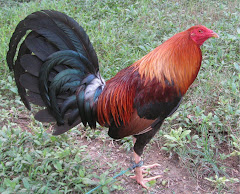
One of the ponkan broodcocks being readied by RB Sugbo for the incoming breeding season. RB Sugbo is among the gamefowl farms very much involved in the Masang Nagmamanok (MANA) Inc. nationwide gamefowl dispersal program.
Another ponkan

Another ponkan broodcock in the trio pen.